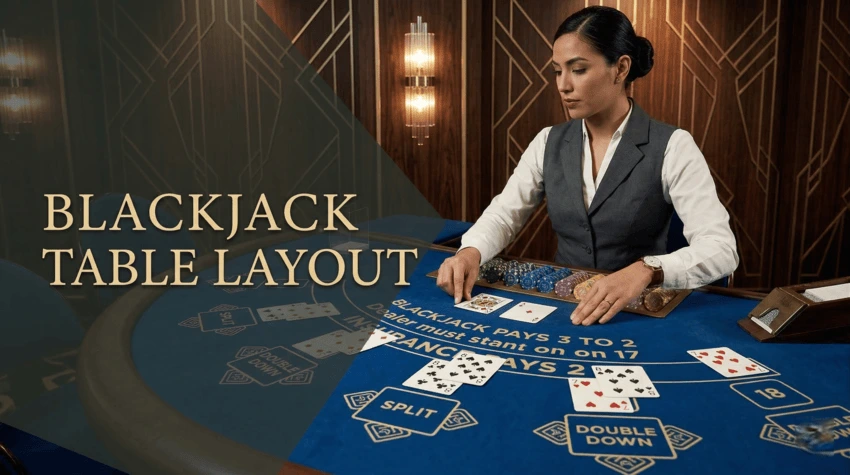
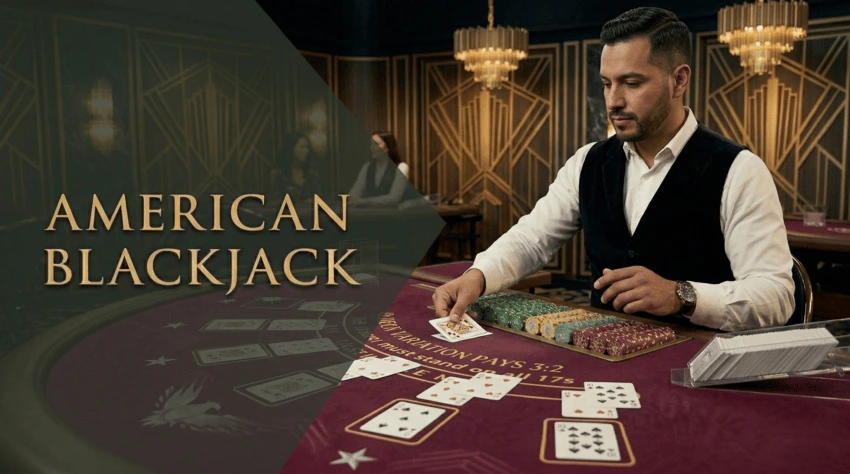
Walk into any casino or log into an online table, and you're probably playing American blackjack, even if you didn't know it had a name. The dealer gets two cards upfront, one visible and one hidden, and checks for blackjack before you make any decisions.
We're breaking down the rules, what you'll get paid, and the strategy moves that'll keep your bankroll from disappearing too fast.
American blackjack runs most casino floors and online platforms. Here's what makes it different: the dealer gets a hidden card right from the start. One card shows, one stays secret. Got an Ace or 10 showing? The dealer peeks at that hidden card before you do anything. Checking for blackjack right away.
Why does this matter? If the dealer has a natural 21, the hand ends right there. You lose your original bet, but nothing more. In other blackjack variants, you might double down or split your hand only to discover the dealer had blackjack the whole time. American rules spare you that particular frustration.
When you play blackjack with crypto or at traditional online casinos, American blackjack is typically the default. Most people learn this version first. The rules make sense, and that hole card peek saves you from ugly surprises.
Beat the dealer without going over 21. That's it. Forget the other players. This is you versus the dealer. Each move boils down to the same thing: do your cards win?
Here's how cards count:
When your Ace counts as 11, that's a soft hand. The total bends if you need it to. Ace and a 6? Soft 17. Pull a 9 and that Ace drops to 1. Now you've got 16 instead of busting at 26. Hard hands don't have that flexible Ace. What you see is what you're stuck with.
Round starts. Dealer deals two cards to everyone, including themselves. Your cards show. Face-up. Dealer's got one card showing (upcard) and one hidden (hole card).
Here's the key difference. Dealer shows an Ace or 10? They peek at that hole card right away. Dealer's got blackjack? Hand's over. You lose your bet, nothing extra. No surprises after you've already doubled your bet.
Cards are out. Your move:
Surrender's an option at some tables. Give up half your bet and bail on a bad hand. Check the rules first. Not every table has it.
Dealers can't make choices. They follow strict rules. Hit until 17 or higher, then they're done. Some tables make dealers hit soft 17 (Ace plus cards adding to 6). Bumps the house edge up a bit.
Look at the table felt. It's printed right there. "Dealer stands on all 17s" beats "Dealer hits soft 17" for you.
What you get paid matters as much as how you play. Payouts change by table. Check first or you might hate what happens.
3:2 blackjack on a $10 bet? You walk with $25. 6:5 tables look the same, but they'll drain your bankroll after enough hands. The damage adds up fast.
Dealer shows an Ace? They'll offer you insurance. Side bet pays 2:1 when the dealer's holding blackjack. Sounds safe, right? The numbers don't agree. Players who know better don't touch it.
You'll see Perfect Pairs and 21+3 at a lot of tables. Bigger payouts, sure. House edge is worse, though. They're fun, not smart.
Blackjack offers one of the lowest house edges in any casino table game when played with basic strategy.
Deck count, dealer rules on soft 17, doubling limits, blackjack payouts, they all shift the percentage.
Less decks? Better odds. Single deck with good rules drops that house edge way down. Online tables usually run six to eight decks. Edge goes up a little, but it's still solid compared to other games.
More decks mean smoother play. Less shuffling. Better pace. Crypto tables? They shuffle virtually after every hand. Card counting won't work, but the base odds stay the same.
American versus European blackjack looks like small stuff until you're actually playing. Changes your risk and how you bet.
American tables check for blackjack right away. Saves your doubled and split bets. European rules? You could split 8s, double what's at risk, then lose it all to a dealer blackjack that was sitting there the whole time. The American version stops the bleeding. You lose the original bet, that's it.
European games run fewer decks. Math says that's better for you. But the doubling and splitting limits kill that edge. American tables give you more options. Makes up for the extra decks.
Most American tables let you double on any two cards. Double after splits, too. European rules lock doubling down to 9, 10, or 11. Like to push hard on strong hands? American rules let you.
Basic strategy's not about gut feelings. It's math. Proven moves that cut the house edge down. These moves count:
Split Aces and you've got two shots at blackjack. Two 8s? That's 16. Awful hand. Splitting fixes both problems.
Insurance sounds smart. It's a sucker bet. Dealer shows an Ace? Still don't take it.
Dealer's showing 2 through 6? They're weak. More likely to bust. That's when you double on strong totals.
Busting's more likely than improving. Keep what you've got. Let the dealer go.
Soft hand means you can't bust on the next card. Dealer shows 7 or better? Hit. No risk of busting.
Dodge these mistakes and you'll save more than you'd win on one lucky hand.
Your gut feels right. It's wrong and expensive. Basic strategy works because the math proves which moves win. Takes an hour to learn. Ignoring it bleeds money forever.
Worth saying again: Insurance plays on fear, not smart thinking. House edge is bad on insurance. Never take it.
Tables aren't all the same. Look at blackjack payout (3:2 versus 6:5), soft 17 rules, and doubling limits. Tiny blackjack table rule changes mess with the odds way more than you'd think.
Yes. Classic blackjack? Standard blackjack? Same thing as American blackjack. Hole card from the start.
Card counting's dead online. Virtual tables shuffle after every hand or run continuous shuffles. Count's useless. Live dealer games cut deeper into the shoe. Tiny edge there, but casinos watch for weird betting.
Less decks, lower house edge. That's the math. Single deck with good rules? Best odds you'll get. Most online tables run six to eight decks though. Rule changes and payouts matter more than deck count at that point.
Yes. Dealer checks for blackjack instantly. Got it? You lose your bet, nothing more. Other versions? You double or split, then find out the dealer had blackjack. Everything's gone.

.webp)