Surrender in blackjack lets you fold a bad hand and lose only half your bet instead of playing it out. It's one of the few rules that actually works in your favor when used correctly.
Most players either ignore surrender entirely or use it at the wrong times. You'll learn when folding makes sense, when it's a terrible idea, and how the rule actually works at live tables and crypto blackjack sites.
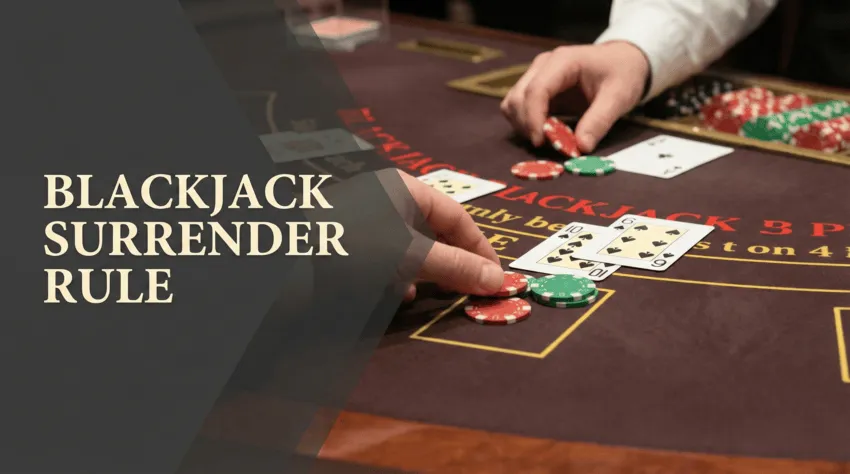
Surrender's an optional rule. You fold your hand, get half your bet back, and move on. Not every table offers it, but when available, surrender gives you a way to limit losses on hands where the math heavily favors the dealer.
Here's the basic idea: some starting hands are so weak against certain dealer upcards that you're better off losing half your bet immediately than risking the full amount. A hard 16 against a dealer showing a 10, for example, loses more often than it wins. You'll lose less money surrendering there than trying to play it out.
So surrender isn't about giving up. You're choosing to lose less for sure instead of probably losing more. Think of it as damage control built into the rules.
The timing matters here. You can only surrender right after getting your first two cards. Once you hit, stand, double down, or split, the option closes. It's a one-time window.
The dealer takes half your bet and pulls your cards off the table. Your hand ends immediately. You keep the other half.
At a live table, saying "surrender" out loud while making the hand signal helps avoid confusion. Dealers appreciate clarity, especially in busy rooms.
One thing worth checking before you sit down: not all blackjack games include this rule. Online tables typically show a "Surrender" button when it's available. At live tables, the rules are usually posted on the felt or on a small placard.
Two versions of surrender exist. The difference matters more than you'd think.
Early surrender lets you fold before the dealer even checks for blackjack. It's rare because it helps players way too much. You can escape even when the dealer ends up having 21.
Casinos lose too much money on it, so they don't offer it. Some European and Asian casinos have it, but don't count on finding it anywhere else.
Late surrender is the standard version. You can only fold after the dealer checks and doesn't have blackjack. If the dealer has 21, you're out the full bet. No surrender.
You'll see this version at most casinos, online tables, and crypto blackjack sites. Late surrender helps, just not as much.
Players who know when to surrender understand the math. Everyone else is guessing. The rule only helps when your hand's in serious trouble.
This is the most common surrender spot. A hard 16 (that's any 16 without an ace as 11) doesn't stand a chance against strong dealer upcards.
If you hit, you risk busting. If you stand, the dealer likely makes a better hand. Either way, you lose more often than you win. Surrendering costs half your bet. You'd lose more trying to play it.
Hard 15 has the same issues against a dealer 10. You probably bust if you hit. The dealer probably makes 17 or better. Bad spot. Folding for half costs you less in the long run.
This one catches newer players off guard. Standing on 17 feels safe, but against a dealer ace, your 17 is an underdog. The dealer makes 18 or better so often that surrendering beats standing mathematically.
Overusing surrender is a common mistake. The rule only works in specific spots. Fold playable hands, and you're throwing money away.
Only surrender when your hand's desperate and the dealer's showing strength. Everything else deserves a real decision.
A quick reference helps during play. This chart's for late surrender. That's what you'll see most.
Early surrender adds a few more spots, but you won't see it often. This chart handles almost everything you'll face. Keep this chart open when you play online. Saves you from expensive mistakes.
Playing blackjack online simplifies the surrender process. When the rule is available, a dedicated "Surrender" button appears alongside Hit, Stand, and Double. No hand signals needed, no verbal confirmation required.
The catch is that not every online variant includes surrender. Before you bet real money, check the game's rules section. Takes five seconds. Beats getting surprised mid-hand.
Crypto blackjack tables at platforms like JB display available actions clearly, so you'll know immediately whether surrender is an option. Provably fair games add another layer here. Provably fair means you can verify each hand's outcome yourself using crypto tech. Even surrendered hands are auditable.
Live dealer blackjack sometimes offers surrender depending on the table and provider. The dealer will announce whether it's available, or you can ask before the shoe begins.
Even experienced players mess this up. Watch out for these.
Fear drives bad decisions. Some players surrender any time they feel uncertain, which bleeds chips on hands that had reasonable winning chances. Sticking to the mathematically correct spots prevents this leak.
Surrender decisions come down to the dealer's upcard. Folding a hard 16 against a dealer 5 is a major mistake. The dealer busts frequently with weak upcards, so standing is the better play in that spot.
Soft hands and pairs give you options. Surrendering wastes them. Splitting or hitting beats folding when you've got an ace or pair. Those extra options? That's why you play the hand.
Surrender works as a bankroll management tool. Folding a losing hand for half your bet keeps chips available for better spots. Over a long session, those saved half-bets add up.
The psychological benefit matters too. Having an exit on terrible hands keeps you from making emotional plays. You're not stuck riding out every bad situation.
Experienced players use surrender like any other tool. Does the math support it? Use it. If not, don't. That's the whole approach.
Yes. Hard 16 against a dealer 9? You're in trouble. You'll lose less by surrendering than trying to play it out.
No. You can only surrender right after getting your first two cards. Once you hit, stand, double, or split, the option closes.
No. Surrender's optional. Availability changes by casino, table, and game type. Check the rules before you sit down or bet.
Draw a horizontal line behind your bet using your index finger while saying "surrender" clearly. Using both signals makes sure the dealer gets it.