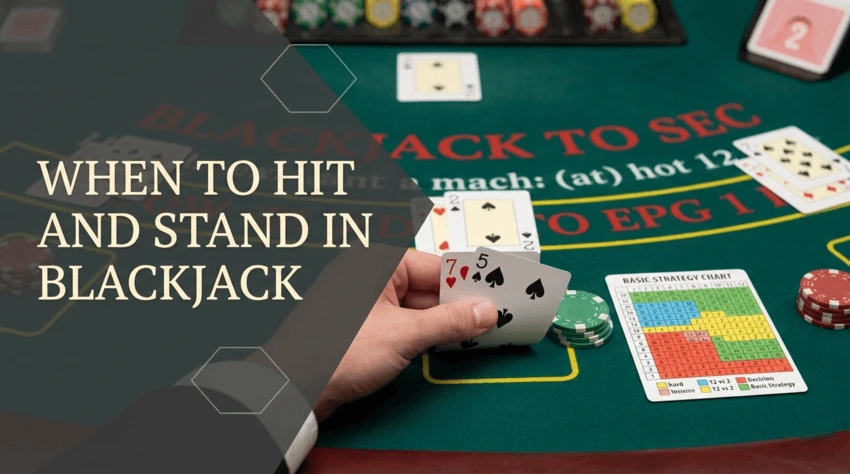
Look, hitting in blackjack isn't complicated. You've got your cards, and the dealer's showing one of theirs. That's all you need to decide. Hit when you've got 11 or lower (obviously), and keep hitting on those awful 12-16 hands if the dealer's showing anything from 7 to Ace. Stand once you hit 17 or better. Also stand on those nervous-making 12-16 totals if the dealer's stuck with a 4, 5, or 6.
You hit on low totals like 11 or less. You also hit on those sketchy 12-16 hands when the dealer's showing 7, 8, 9, 10, or Ace. Here's why: if the dealer's probably making a strong hand, just standing there with your weak 14 is basically giving up. You hit because losing slowly feels worse than taking a shot.
Every time you decide to hit, you're really looking at two things: what you've got and what the dealer's showing. Your cards alone don't tell the full story. The dealer's card is the other half of the story. It tells you if hitting or standing actually gives you a fighting chance.
With a hand total of 11 or less, you can't bust. Any card you pull either helps you or at least doesn't hurt. There's literally no reason not to take another one. This is the easiest decision in blackjack.
A "hard hand" is any hand without an Ace, or one where the Ace counts as 1 to avoid busting. Totals between 12 and 16 are often called "stiff hands" because they sit in an awkward spot: too low to win most showdowns, yet high enough to bust if you draw a 10-value card.
If the dealer's showing 7 through Ace, standing on a stiff hand almost always loses. Here's why:
Hitting on 14 against a dealer's 10 feels risky, and it is. But standing feels safe while actually losing more money over time. The numbers say hit because most of the time, the dealer's ending up with something strong.
A "soft hand" contains an Ace that counts as 11. Soft 17, for example, could be Ace-6. Soft hands give you a safety net. Hit and pull a card that would normally bust you? No problem. The Ace just drops down to 1, and you're still playing.
Always hit a soft 17. So many players mess this up. They see 17 and immediately stand, thinking it's decent. But soft 17 isn't really a competitive hand. You can't bust on the next card, and you've got plenty of room to get better. Think of it this way: a soft 17 is not a real 17.
Standing means you're done taking cards and going with what you've got. Stand when hitting would probably bust you, or when the dealer's probably going to bust on their own anyway.
Once your hard total reaches 17 or higher, hitting becomes dangerous. You're way more likely to bust than get better at this point. At this point, you've got a competitive hand. Stand and let the round play out.
When the dealer shows a 4, 5, or 6, the situation flips entirely. Dealers have to keep hitting until they hit 17. Starting from a low card means they're pulling multiple times. More cards pulled means more chances to bust.
Standing on 13 against a dealer's 5 might feel passive, but it's the profitable play over time. You're not trying to win with a strong hand here. You're trying to still be standing when the dealer busts.
A soft 19 or 20 is already a strong hand. Why risk it when you're probably winning already? Stand and take your chances.
Everything about hitting or standing comes back to what the dealer's showing. Your hand total alone doesn't tell you what to do. The dealer's visible card is the other half of the equation, and it changes everything.
When the dealer shows a 2 through 6, they're in a vulnerable position. They're stuck hitting until they get to 17, so a low start means pulling card after card. Every card they pull is another chance to go over.
Your job against weak dealer cards is straightforward: don't bust. Stand on borderline hands and let the dealer take the risk of drawing into a bust. You win by surviving, not by building a monster hand.
When the dealer's showing 7 through Ace, they usually land somewhere between 17 and 21 without busting. You can't win by standing on 14 and hoping for the best. You have to improve your hand, even if that means accepting some bust risk.
You need to get soft versus hard hands down early. It changes everything. Same number, totally different move depending on whether it's soft or hard. That's why this matters.
Hard hands don't have an Ace, or if they do, the Ace only counts as 1 (because 11 would bust you). Hard 16 (like 10-6) has no flexibility. If you hit and draw a 7, you bust immediately.
Quick reference for hard hands:
A soft hand contains an Ace counted as 11, giving you a safety net. Soft 16 (Ace-5) can become either 6 or 16, depending on what you draw next. That safety net means you can play way more aggressively.
Quick reference for soft hands:
This chart covers basically every situation you'll see at the table. Use it as a starting point until the decisions become automatic.
Tip: The chart above covers hitting and standing only. Doubling down and splitting follow separate rules that can further reduce the house edge when applied correctly.
Even players who know basic strategy sometimes fall into predictable traps. Know what mistakes look like, and you won't make them yourself.
Fear of busting leads many players to stand on 15 or 16 against a dealer's 10. It feels safer. But standing in this spot loses more money over thousands of hands at live tables than hitting does. The dealer's way more likely to make something strong than bust. You've gotta take your shot.
Yeah, hitting might bust you right away. But standing? That's just losing slowly. Over time, hitting comes out ahead.
Hitting on 11 is correct, but doubling down is often better. Doubling means you match your original bet and get exactly one more card. When the dealer's weak, doubling on 11 makes you way more money than just hitting. Missing opportunities to double costs money over time at the casino.
Some players only look at their own cards. They see 14 and think "hit" without checking what the dealer shows. But 14 against a dealer's 5 is a stand. 14 against a dealer's 10 is a hit. The dealer's card tells you half the story. Ignore it, and you'll make expensive mistakes.
Soft 17 trips up more players than almost any other hand. Your gut says stand on 17. But soft 17 can get better without any chance of busting. Always hit it. A simple way to remember: soft 17 is not a real 17.
Before you hit or stand, make sure there isn't something better you should be doing. Here's the order: Can you surrender? Can you split? Can you double? If none of those work, then you're hitting or standing. Stick to this order, and you won't miss chances to make more money.
Crypto blackjack tables often allow very small minimum bets, making them ideal for practicing basic strategy without significant risk. JB's tables offer fast deposits and quick gameplay, so you can get plenty of hands in while the decisions become second nature.