
Every term you need to play blackjack with confidence, zero confusion, and zero wasted time.
Blackjack has its own language. Walk up to a table without knowing it, and you'll feel like everyone got a memo you missed.
This is that memo.
We broke down every term worth knowing, from the absolute basics to card counting lingo and tournament vocab.
Let's get into it.
Before you place a single bet, lock these down. They're the foundation of every hand you'll ever play.
Blackjack (natural): An Ace plus any 10-value card (10, Jack, Queen, King) dealt as your first two cards. This is the best possible hand. It usually pays 3:2, meaning a $10 bet wins $15.
Not the same as hitting 21 with three or more cards. That's just 21. A natural blackjack outranks it.
Bust: Your hand goes over 21. Game over for that hand. You lose your bet immediately, regardless of what the dealer holds.
Push A tie: Your hand total matches the dealer's. Nobody wins, nobody loses. Your bet stays where it is.
Hand: The cards you're holding in a single round of play.
Round: One complete cycle of dealing, decisions, and payouts for every player at the table.
Shoe: The box that holds multiple decks of cards. Most blackjack games use 6 or 8 decks shuffled together and loaded into the shoe. Online crypto blackjack tables simulate this same mechanic.
Deck: Standard 52 cards. Blackjack rarely uses just one. More decks in the shoe slightly shift the math in the house's favor.
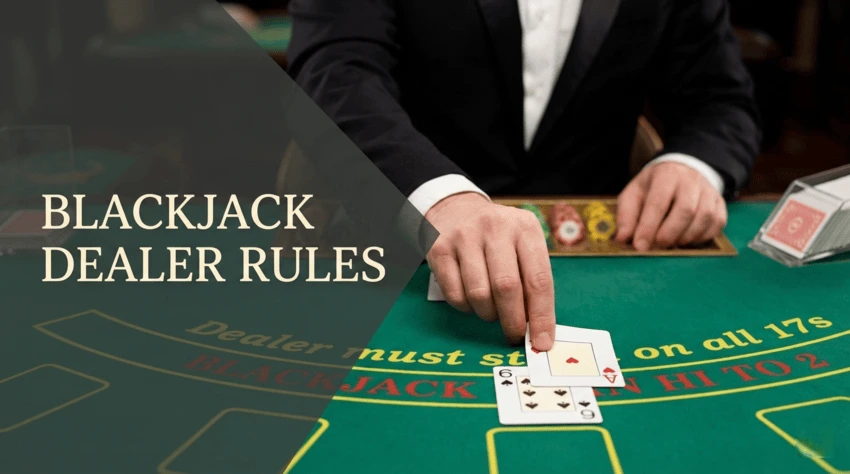
Upcard: The dealer's face-up card. This is the single most important piece of information you have when deciding your next move. Every strategy chart revolves around it.
Hole card: The dealer's face-down card. You don't see it until after all players act. Some game variants (like European no-hole-card blackjack) don't deal this card until later.
Face cards: Jack, Queen, King. All worth 10. Combined with 10s, they make up roughly 30% of the deck. That ratio matters more than you'd think.
Hard hand: A hand with no Ace, or a hand where the Ace counts as 1 because counting it as 11 would bust you. Example: a 10 and a 7 is a hard 17.
Soft hand: A hand with an Ace counting as 11. Example: Ace + 6 = soft 17. You can still take a hit without busting, because the Ace can flip to 1 if needed. This flexibility changes your strategy for that hand completely.
This is where new players get tripped up. A few of these terms sound similar but mean very different things at the table.
Pat hand: A hand totaling 17 through 21. You're in "stand" territory. No reason to risk another card in most situations. The hand is complete, or close to it.
Stiff hand: A hand totaling 12 through 16. The danger zone. Too low to feel good about standing, too high to hit without real bust risk. These hands are where blackjack gets interesting (and sometimes painful).
Pair: Two cards of the same rank. Two 7s, two Queens, two Aces. Pairs unlock the option to split.
Soft 17 vs. hard 17. Both total 17, but they play very differently.
Why this matters: many casinos require the dealer to hit on soft 17. That rule slightly increases the house edge because it gives the dealer an extra chance to improve. Look for tables where the dealer stands on all 17s if you want the best odds.
Blackjack vs. 21: A blackjack (natural) is specifically an Ace + 10-value card dealt as your first two cards. It pays a bonus, typically 3:2.
Hitting 21 with three or more cards? That's just 21. It still wins most of the time, but it pays even money (1:1), and it loses to a dealer's natural blackjack.
Quick rule: all blackjacks are 21, but not all 21s are blackjack
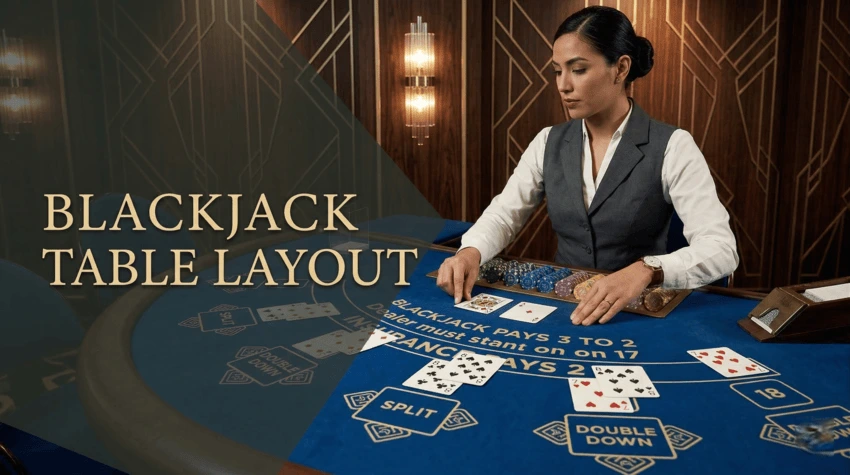
The physical vocabulary of a blackjack table layout. Useful whether you're sitting at a live online blackjack table on a crypto casino or walking into a brick-and-mortar room.
First base: The seat to the dealer's far left. This player acts first every round. No strategic advantage or disadvantage, it just determines order.
Third base: The seat to the dealer's far right. This player acts last before the dealer. Some superstitious players believe third base "controls" the dealer's outcome. They don't. Every seat faces the same math.
Betting circle (or betting box): The marked area on the table where you place your chips. Your bet goes here before any cards are dealt. No chips in the circle, no hand dealt to you.
Cut card: A solid-colored plastic card inserted into the shoe after shuffling. When the cut card appears during dealing, it signals the end of that shoe. The remaining cards behind it won't be dealt. This limits how deep into the shoe the game goes, which directly affects card counting viability.
Burn card: The top card discarded face-down after a shuffle or at the start of a new shoe. It's removed from play. Standard procedure, nothing mysterious.
Pit boss: The floor supervisor watching over a group of tables. They track game integrity, handle disputes, and keep an eye on unusual betting patterns. In live online crypto blackjack, this role is handled by backend monitoring and provably fair systems that let you verify each deal independently.
Chip tray: The rack of chips in front of the dealer. That's where your payouts come from and where your lost bets end up.
Discard rack (or discard tray): The clear plastic holder where dealt cards go after each round. It sits to the dealer's right. Card counters pay attention to how full this tray is because it tells them how many cards have been played from the shoe.
Once you move past the basics and start studying the game, you'll run into these terms constantly. They're the language of smarter play.
House edge: The mathematical advantage the casino holds over time, expressed as a percentage. In standard blackjack with good rules and correct play, the house edge sits around 0.5%. That's extremely low compared to most casino games.
The catch: that 0.5% assumes you're playing perfect basic strategy. Gut-feel decisions push the edge higher.
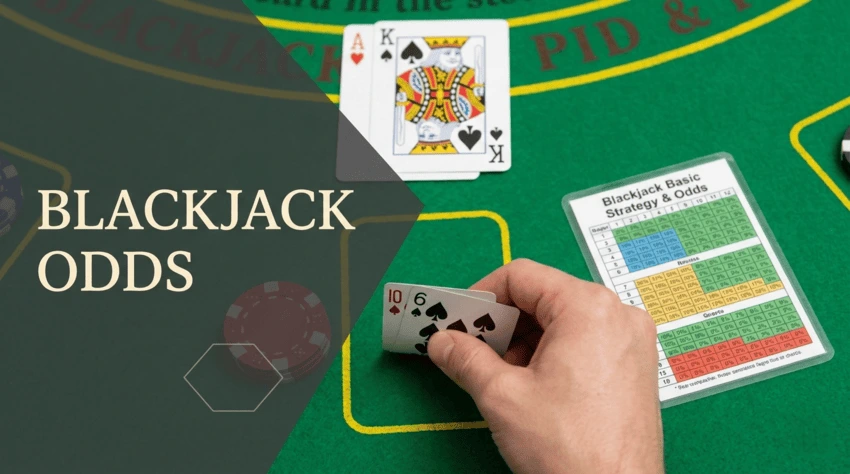
Basic strategy: A mathematically derived set of decisions for every possible hand combination against every possible dealer upcard. It tells you exactly when to hit, stand, double, split, or surrender.
It's not a guarantee. It's the statistically best move for each situation. Over thousands of hands, it minimizes your losses.
Tons of free charts exist online. Memorize one before you play crypto blackjack for real money.
Expected value (EV): The average amount you expect to win or lose per bet over the long run. Positive EV means the bet favors you. Negative EV means it favors the house. Almost every standard blackjack bet is slightly negative EV, but basic strategy keeps it close to even.
RTP (return to player): The flip side of house edge. If the house edge is 0.5%, the RTP is 99.5%. It represents the percentage of total wagers paid back to players over time.
Look for blackjack variants with RTP above 99%. That's where the best value lives.
Variance: How much your results swing in the short term. Blackjack is a relatively low-variance game compared to slots, but sessions can still run hot or cold. Variance is why you can play perfect strategy and still lose five hands in a row.
Bankroll: The total amount of money you've set aside for playing. Not your rent money. Not your grocery budget. A separate, dedicated fund for gambling.
Unit: A standard bet size, usually defined as a fixed percentage of your bankroll. If your bankroll is $500 and your unit is $10, that's a 2% unit. Keeping units consistent helps you survive variance.
Flat betting: Betting the same amount every hand, no matter what happened on previous hands. Simple, disciplined, and effective for bankroll management.
Progression betting: Adjusting your bet size based on previous results. Raise after a win (positive progression) or raise after a loss (negative progression, like the Martingale).
The trade-off: progressions can amplify short-term swings in your favor, but they don't change the underlying math. No betting system overcomes the house edge. They change the shape of your risk, not the expected outcome.
Card counting isn't illegal, but casinos don't love it. Here's the vocabulary you'll encounter if you study this side of the game. At most bitcoin blackjack tables online, RNG-based dealing and frequent shuffles make traditional counting ineffective. Live dealer shoes with deeper penetration are where it becomes relevant.
Running count: The cumulative total you track as cards are dealt, based on assigning a value to each card. In the Hi-Lo system, low cards (2-6) add +1, neutral cards (7-9) add 0, and high cards (10-Ace) subtract -1.
True count: The running count divided by the estimated number of decks remaining in the shoe. This adjusts for multi-deck games and gives a more accurate picture of the remaining card composition.
Example: running count of +6 with 3 decks left = true count of +2.
Hi-Lo system: The most widely taught card counting method. Simple tag values, easy to learn, and surprisingly effective when executed with discipline. It's balanced, meaning a full deck counted from start to finish returns to zero.
Back-counting (wonging): Named after Stanford Wong. The practice of watching a table without playing, counting cards from behind, and only sitting down when the count turns favorable. It removes the disadvantage of playing through negative counts.
Casinos caught on. Many now restrict mid-shoe entry because of this technique.
Heat: Attention from casino staff who suspect you're counting. If the pit boss starts hovering, shuffles come early, or your betting spread gets questioned, you're catching heat.
Penetration: How deep into the shoe the dealer goes before reshuffling. Expressed as a percentage or fraction. A game with 75% penetration deals three-quarters of the cards before the cut card appears.
More penetration = better for counters. Less penetration = less useful information per shoe.
Balanced vs. unbalanced count: A balanced system (like Hi-Lo) nets zero when you count through a complete deck. You need to convert to a true count for multi-deck games.
An unbalanced system (like KO, or Knock-Out) doesn't net zero. The advantage: you skip the true count conversion. The trade-off: slightly less precision.
Blackjack tournaments run differently from standard table play. You're competing against other players, not just the dealer. These terms come up in competitive events.
Elimination round: A set number of hands where players compete at the same table. Lowest chip counts get eliminated at the end of the round. Survive and you advance.
Chip leader: The player with the most chips at any point during a round. Being chip leader gives you strategic flexibility. You can play conservatively while others are forced to take risks to catch up.
Advance: Moving to the next round of the tournament. Usually the top one or two chip stacks at each table advance.
Rebuy: Some tournaments let you buy back in after losing your chips. Rebuy tournaments tend to be looser and more aggressive because players know they have a safety net.
Max bet strategy: A tournament-specific tactic where you bet the table maximum on the final hands to leapfrog the chip leader. Timing matters. Bet max too early and you risk busting out. Save it for the last few hands when you need a swing.
Tournament blackjack rewards a completely different skill set than regular play. Bankroll management becomes about relative chip position, not absolute gains.
Standard blackjack is clean and straightforward. But you'll find plenty of variants and side bets at crypto casino table games. Here's what each one means so you're not caught off guard.
Perfect Pairs: A side bet that pays out if your first two cards form a pair. Mixed pair (different suits, different colors) pays the least. Colored pair (same color, different suits) pays more. Perfect pair (identical suit) pays the most.
The house edge on this side bet runs significantly higher than the main game. Fun in small doses, costly as a habit.
21+3: A side bet combining your two cards with the dealer's upcard to form a three-card poker hand. Flush, straight, three of a kind, straight flush, or suited trips. Payouts vary by table.
Same warning: higher house edge than the base game. Treat it like a bonus round, not a strategy.
Spanish 21: A variant played with a 48-card deck. All four 10s are removed (face cards stay). This change increases the house edge, but Spanish 21 compensates with player-friendly rules: late surrender, doubling after splits, bonus payouts for certain 21 combinations, and the rule that player 21 always wins.
If you know the specific basic strategy for Spanish 21, the game plays well. Use standard blackjack strategy here and you'll bleed chips.
Blackjack Switch: You play two hands simultaneously and can swap the second card between them. Dealt a 10-6 and a 5-Ace? Switch them to 10-Ace and 5-6. Powerful move.
The catch: natural blackjack only pays even money (1:1 instead of 3:2), and a dealer 22 pushes against all player hands instead of busting. Those rule changes balance out the switching advantage.
Pontoon: The British cousin of blackjack. Same goal, different terminology. A "pontoon" is a natural (Ace + 10-value). A "twist" is a hit. A "stick" is a stand. Five cards under 21 (a "five card trick") beats everything except a pontoon.
Both dealer cards stay face-down, which removes a big chunk of information you'd normally use. The strategy shifts accordingly.
Super Fun 21: A single-deck variant with liberal rules: you can double on any number of cards, late surrender is available, and a player's natural blackjack always wins (even against a dealer natural). Sounds generous.
The tradeoff: blackjack pays even money (1:1) unless it's a suited natural in diamonds. That single rule change erases most of the advantage from the friendly rules. The name is catchy. The math is less fun than it sounds.
You now have the full vocabulary. Every term from the felt to the algorithm, from your first hand to a tournament final.
Want to put this knowledge to work? JB makes it simple to play blackjack with crypto. Fast sign-up, instant deposits, provably fair dealing where you can verify every shuffle yourself, and withdrawals that don't make you wait.
No jargon walls. No slow payouts. Just sharp play.