Double Ball Roulette by Evolution


Double Ball Roulette looks like European roulette. Same wheel, same layout, same 37 pockets. But the second ball changes everything about how your bets pay and which wagers actually make sense. Get this wrong and you'll bleed chips on bets that seem safe but carry twice the house edge they should.
What is Double Ball Roulette?
Evolution launched this game in May 2016, designed by Jeff Hall, a name that comes up often in roulette game design. It streams live from studios in Malta and Latvia.
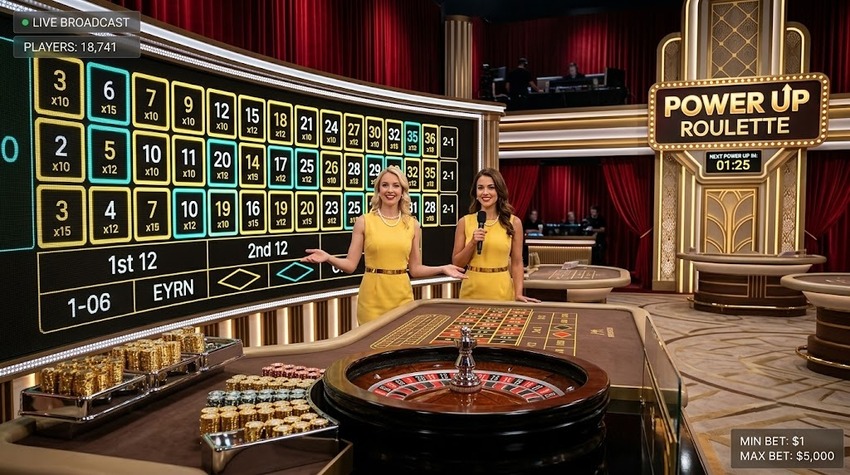
The setup is a standard single-zero European wheel with 37 pockets. Two balls get fired into the wheel using compressed air from a tube. The second ball trails the first by about one second. Both land independently.
The table layout is identical to European roulette with one addition: a second racetrack ring for the Double Ball Jackpot bet.
This is currently the only live dealer two-ball roulette you'll find online. And no, it's not just "European roulette with a bonus ball." The two balls fundamentally rewire how inside and outside bets work. The payouts shift. The house edge varies by bet type. And that changes which bets are smart.
How the two balls change the game
This is the part most guides get wrong or explain poorly. So let's make it clean.
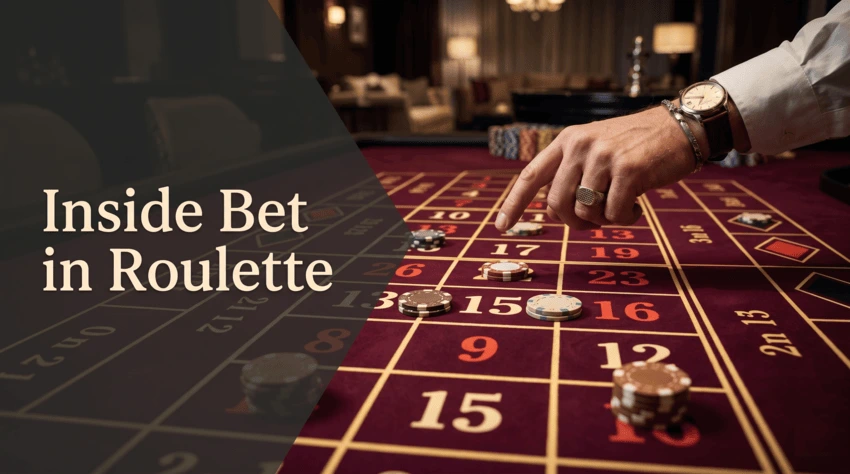
Inside bets (straight up, split, corner, street, line): Only one of the two balls needs to land on your number. Two chances to win per spin. The trade-off: payouts are roughly cut in half compared to standard roulette. If both balls hit winning numbers, you get paid at full standard roulette rates.
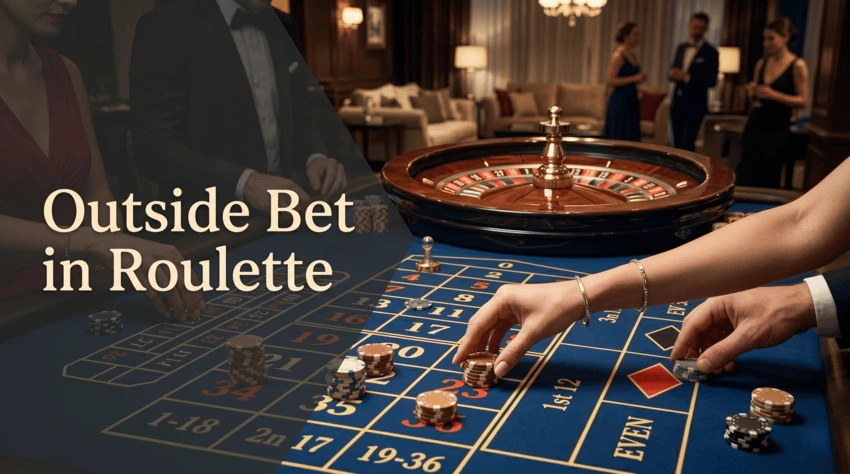
Outside bets (red/black, odd/even, high/low, dozens, columns): Both balls must land on winning outcomes. Two conditions to meet, not one. The trade-off: payouts roughly double compared to standard roulette.
Jackpot bet: Both balls land in the exact same pocket you picked. Pays 1,300:1. Probability is 1 in 1,369.
Here's the thing that trips people up: inside bets got easier to win but pay less. Outside bets got harder to win but pay more. This asymmetry is the entire game. Miss it, and you'll make expensive decisions without realizing it.
Payouts and house edge
This is where Double Ball Roulette gets interesting. In standard European roulette, the house edge is 2.70% across every single bet. Doesn't matter what you wager. Here, bet selection actually moves the house edge.
Inside bets (either ball wins)
- Straight up (1 number): 17:1 payout. Both balls hit: 35:1. House edge: 2.78%
- Split (2 numbers): 8:1. Both hit: 17:1. House edge: 2.99%
- Street (3 numbers): 5:1. Both hit: 11:1. House edge: 3.20%
- Corner (4 numbers): 3.5:1. Both hit: 8:1. House edge: 3.75%
- Line (6 numbers): 2:1. Both hit: 5:1. House edge: 4.86%
Outside bets (both balls must win)
- Red/Black, Odd/Even, High/Low: 3:1 payout. House edge: 5.33%
- Dozens, Columns: 8:1. House edge: 5.33%
Jackpot bet
- Both balls on your number: 1,300:1. True odds: 1,368:1. House edge: ~5.00%
The pattern is clear. Single-number inside bets sit at 2.78%, barely above standard European roulette. The wider your inside bet, the more the edge climbs. Outside bets jump to 5.33%, nearly double what you'd pay at a regular European table.
This is the opposite of what most players assume. In standard crypto roulette, outside bets feel "safer" and carry the same edge. In Double Ball Roulette, they're the most expensive bets on the board.
The 1,300:1 jackpot bet
Both balls. Same pocket. Your pocket.
The math: 1/37 × 1/37 = 1 in 1,369. The payout is 1,300:1, which creates roughly a 5% house edge. You could spin 1,000 times and never see it hit.
This is a lottery ticket, not a strategy play. Treat it like one. Drop it on occasionally for the adrenaline. Don't place it every spin unless you enjoy watching your bankroll thin out for a long-shot hit.
One thing worth checking: some versions pay 1,200:1 instead of 1,300:1. That pushes the house edge higher. Always look at the posted payout before you sit down.
Strategy
Let's be direct. This is still roulette. Still pure chance. No system changes the math on any given spin.
But Double Ball Roulette is one of the rare roulette variants where which bet you choose genuinely affects the house edge. That matters.
Best bets: Single-number straight-up wagers. At 2.78% house edge, they're close to standard European roulette and give you two chances to connect per spin. This is the sharpest play in the game.
Worst bets: Outside bets. Red/black, odd/even, dozens, columns. All sitting at 5.33%. If outside bets are your go-to at the roulette table, you're paying more than double what you'd pay at a standard European wheel. That adds up fast.
The jackpot bet: Fun at ~5% house edge and 1 in 1,369 odds. Place it when the mood hits. Don't make it a habit.
Betting systems: Martingale, D'Alembert, and similar systems are built around standard roulette payouts. The modified payout structure in Double Ball Roulette breaks the progression math these systems depend on. If you insist on using a system, you'd need to rebuild it around the adjusted payouts. Easier answer: skip systems and focus on single-number inside bets.
Bankroll note: Two balls per spin means more variance. Your results will swing wider than at a standard table. Scale your bet size down accordingly.
Double Ball Roulette vs. standard European roulette
The bottom line: if you stick to single-number inside bets, you get a nearly identical house edge to European roulette with two chances to win per spin and occasional double payouts. If you lean on outside bets, you're paying a steep premium for the two-ball format.
Double Ball Roulette vs. Lightning Roulette
Both are Evolution's premium crypto roulette variants. Both modify the standard payout structure. They go about it differently.
Double Ball adds a second ball and splits inside/outside bet logic. Lightning Roulette adds random multipliers (up to 500x) but drops the base straight-up payout from 35:1 to 29:1.
Both land around 2.70% house edge on their best bets. Double Ball rewards inside bet focus across the board. Lightning rewards straight-up number betting specifically, since those are the only bets eligible for multipliers.
Double Ball's hook is the two-ball mechanic and the jackpot. Lightning's hook is the multiplier drop. Both carry higher variance than a standard European table. Pick based on which kind of volatility appeals to you.
Tips for players
- Bet single numbers. 2.78% house edge. Two chances to win. Best play in the game.
- Don't default to outside bets. They feel familiar but cost 5.33% here. If outside bets are your thing, standard European roulette gives you the same action at 2.70%.
- Check the jackpot payout. 1,300:1 is standard. 1,200:1 versions exist and cost you more edge.
- Size down your bets. Two balls mean wider swings. Adjust your bankroll management.
- Drop the Martingale. Modified payouts break the progression math. Systems designed for standard roulette don't translate cleanly here.
- Use the jackpot bet sparingly. It's a 1 in 1,369 shot. Fun in small doses. Expensive as a routine play.
Double Ball Roulette rewards players who understand the payout asymmetry and bet accordingly. Stick to inside numbers, keep your stakes measured, and enjoy the two-ball action without overpaying for it.