Roulette Rules for Beginner


Roulette looks intimidating until you realize the entire game boils down to one question. Where will the ball land? You pick a number or group of numbers, place your chips, and wait for the wheel to decide.
The rules are simpler than most table games, which is partly why roulette has stayed popular for centuries. You'll learn how the wheel works, what each bet pays, why American and European versions aren't the same, and the mistakes that cost beginners money.
What is roulette
Roulette is a casino table game where players place bets on where a ball will land after spinning around a numbered wheel. The dealer sends the ball one way while the wheel goes the other. Gravity does its thing, and the ball drops into a numbered pocket. That single number determines who wins and who loses.
Physical casino or crypto roulette online? Same game, same rules. You pick where to place your chips, the wheel spins, and the outcome is entirely random. No skill involved, no complex decisions to make mid-game.
How the roulette wheel and table work
The game has two parts: the wheel itself and the betting layout where you put your chips. Get these two things straight, and the rest makes sense fast.
The roulette wheel
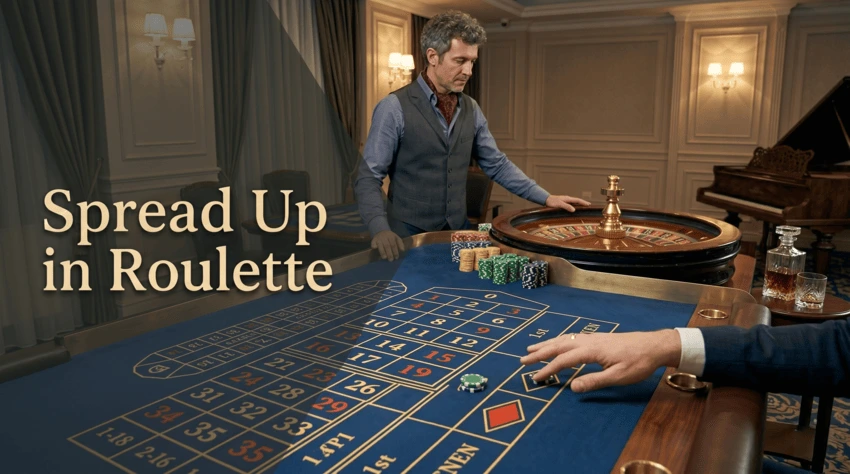
The wheel has pockets numbered 0 to 36. Red and black colors alternate around the wheel, while the zero (and double zero on American wheels) sits in green. The numbers aren't arranged in order around the wheel. Instead, they're mixed up so high, low, odd, and even numbers stay balanced around the wheel.
The betting table layout
The table shows all 36 numbers laid out in a grid with three columns and twelve rows. Around the edges, you've got spots for bigger bets like red/black, odd/even, and chunks of twelve numbers. The grid? That's for betting on specific numbers. Outer sections cover larger groups of numbers.
Basic roulette rules every player should know
Roulette rules don't change much between casinos and online sites. Here's what applies everywhere:
- One number wins per spin: The ball lands in exactly one pocket. That number decides every bet on the table.
- Betting closes before the ball drops: The dealer calls "no more bets" while the ball is still moving. After that call, chips stay where they are.
- Table minimums apply: Most tables set a minimum bet amount, sometimes with separate minimums for inside bets and outside bets.
- Chip colors vary by player: At physical tables, each player often receives a unique chip color to keep bets organized during payouts.
Learn the rules once, and you're set for any roulette table out there.
Types of roulette bets
Roulette bets break into two types. Inside bets go directly on numbers. Outside bets cover larger groups. Pick inside bets; you win less but get paid more. Pick outside bets; you win more often but get smaller payouts.
Inside bets
Inside bets go on specific numbers or small groups of them. You won't win often, but when you do? The payout's bigger.
- Straight up: One number. Place your chip directly on it.
- Split: Two numbers that sit next to each other. Chip goes on the line between them.
- Street: Three numbers in a horizontal row.
- Corner: Four numbers that form a square. Chip sits on the intersection where all four meet.
- Six line: Two rows of three, covering six numbers total.
Outside bets
Outside bets spread across bigger chunks of the wheel. They hit more often, so the payouts are smaller.
- Red/Black: Bet on the color of the winning number.
- Odd/Even: Bet on whether the number is odd or even.
- High/Low: Bet on 1-18 or 19-36.
- Dozens: Bet on the first twelve (1-12), second twelve (13-24), or third twelve (25-36).
- Columns: Bet on one of the three vertical columns of numbers.
New to roulette? Most people start with outside bets. Winning more often keeps things interesting, even if the payouts are smaller. It's a better way to learn.
Roulette payouts and odds
Payouts in roulette follow a straightforward pattern: harder bets pay more. Here's how the numbers break down:
That green zero? That's where the house edge lives. When the ball lands on zero, most outside bets lose. On a European wheel with one zero, the house edge sits around 2.7%. American wheels with two zeros push that edge closer to 5.26%.
How a round of roulette works
Each round works the same way. Watch a few spins, and you'll get the rhythm.
1. Place your bets
Put chips on the layout where you want to bet. You can spread chips across several bets at once. Mix inside and outside bets, whatever works.
2. The dealer spins the wheel
The dealer sets the wheel in motion and releases the ball in the opposite direction. Online? You just click a button to spin.
3. Bets close
While the ball is still circling, the dealer announces "no more bets." After that? Hands off. Just watch.
4. The ball lands
The ball slows down and drops into a numbered pocket. That's your winning number.
5. Payouts are made
Dealer marks the winner, clears losing chips, pays the people who got it right. Payouts done? Marker comes off, new round starts.
American vs European roulette
The two main roulette variants look almost identical, but one key difference changes the math.
That extra zero almost doubles what the house takes from you. The game feels the same, but your money lasts longer on European tables. If you see both? Go European.
Quick note: Most online platforms, including crypto roulette sites, offer both variants. Check which version you're joining before placing bets.
Roulette mistakes beginners often make
Rules are important, but they're not everything. Dodging rookie mistakes matters just as much.
- Chasing losses: Doubling your bet after losing? That usually backfires. The wheel has no memory. Bigger bets just lose your money faster when you're cold.
- Skipping table limit checks: Every table sets different minimums and maximums. Finding out halfway through that you can't bet how you wanted? Annoying as hell.
- Betting after the call: Reaching for chips after "no more bets" causes problems with dealers and other players. It's also against the rules.
- Misreading payouts: Figure out what each bet pays before you put chips down. Getting confused when they pay out? That sucks.
- Picking American when European is available: That extra zero on American wheels costs you money and gives you nothing back.
How to play roulette online
Online roulette? Same rules as playing in person. The only difference is that you click instead of putting down real chips.
Two formats dominate online play for table games, though slots remain the most popular online option. RNG tables use software to randomize each spin. Play as fast or slow as you want. No waiting. Live dealer tables stream a real person spinning a real wheel, combining online convenience with the feel of a physical casino.
Crypto roulette adds speed to the equation. Money moves in and out faster than with banks. Some sites also let you verify that the games are actually random. Provably fair lets you check each spin's randomness yourself through crypto tech. You're not just taking their word for it.
Play roulette at JB with confidence
JB has crypto roulette with instant deposits and fast withdrawals. The interface is made for speed. Want RNG tables to play solo? Got it. Want live dealers for the social vibe? That too. Start playing at JB when you're ready.