Neighborhoods Roulette Side Bet


The neighborhoods roulette side bet lets you cover five numbers with a single chip: your chosen number plus the two numbers sitting on either side of it on the physical wheel. It's one of the more efficient ways to bet on a wheel sector without placing five separate wagers.
This guide breaks down how neighborhoods bets work, what they pay on different wheel types, and how to use them without draining your bankroll faster than you'd like.
What is the neighborhoods roulette side bet?
Neighborhoods betting works like this. Pick any number, and you're automatically covering it plus the two numbers sitting on either side on the actual wheel. Five numbers total with one chip. Standard bets follow the table layout. Neighborhoods bets? They follow what's actually on the wheel. The numbers grouped together often look random if you're only looking at the felt, but they're actually neighbors on the spinning wheel itself.
You'll see this bet on most American double-zero wheels. Single-zero European tables have it too, just with slight variations. No matter which version you play, it works the same way: pick your number and you're covering its neighbors on the wheel.
- Core concept: One bet covers a center number and two neighbors on each side
- Total coverage: Five consecutive numbers on the wheel
- Key distinction: Based on wheel position, not the numbered table layout
So if you bet on 17, you're not betting on 16 and 18. Those are table neighbors. You're betting on whatever numbers physically sit next to 17 on the spinning wheel.
How neighborhoods bets work
Wheel layout and neighboring numbers
The wheel's number sequence looks nothing like what you see on the table layout. American double-zero wheels run 0, 28, 9, 26, 30, 11, 7 the pattern alternates high and low, odd and even. European wheels use a different setup entirely.
This matters because your "neighbors" depend entirely on where numbers land on the wheel. Two numbers next to each other on the felt? They could be on opposite sides of the wheel. Number 1 and number 2 look like neighbors on the table, but on an American wheel, they're separated by more than a dozen pockets.
Placing your neighborhoods bet
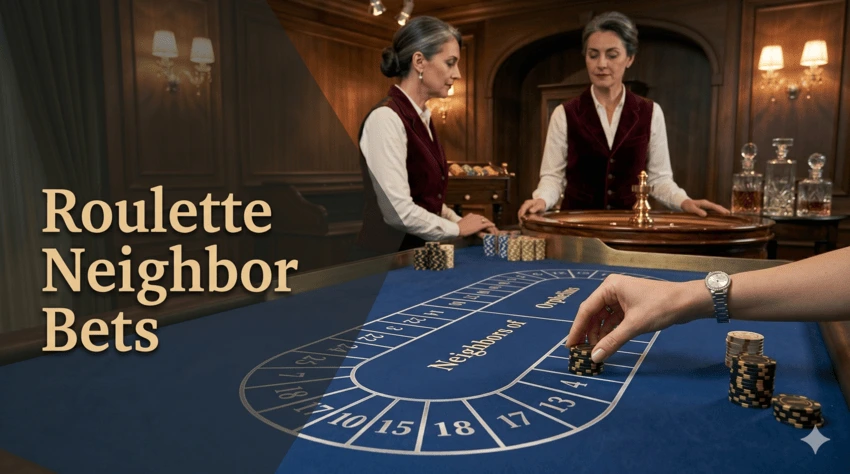
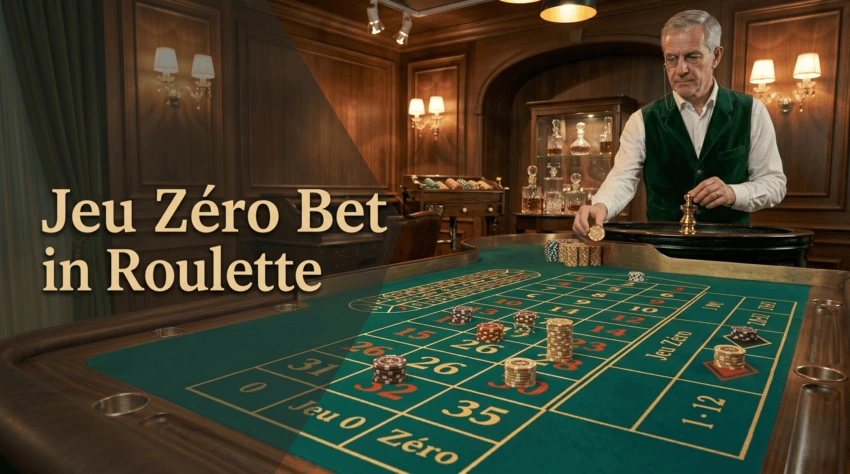
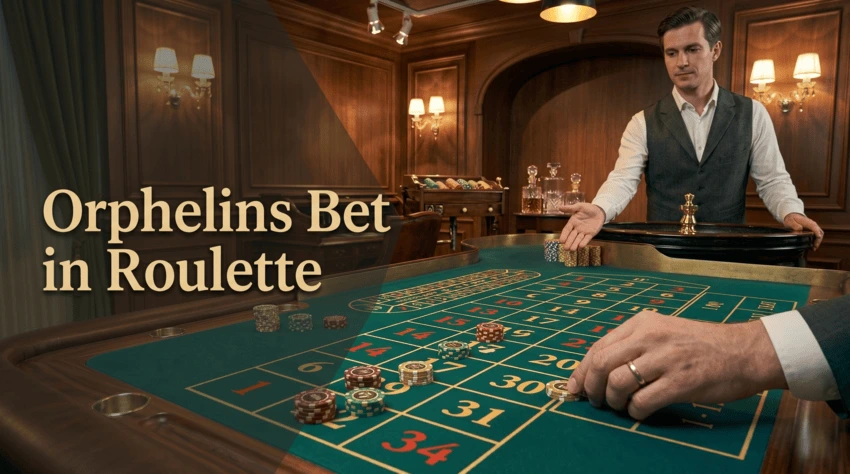
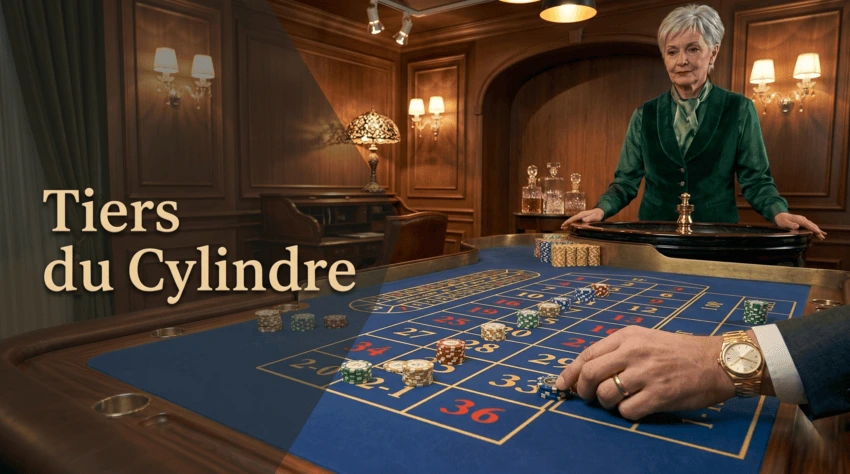
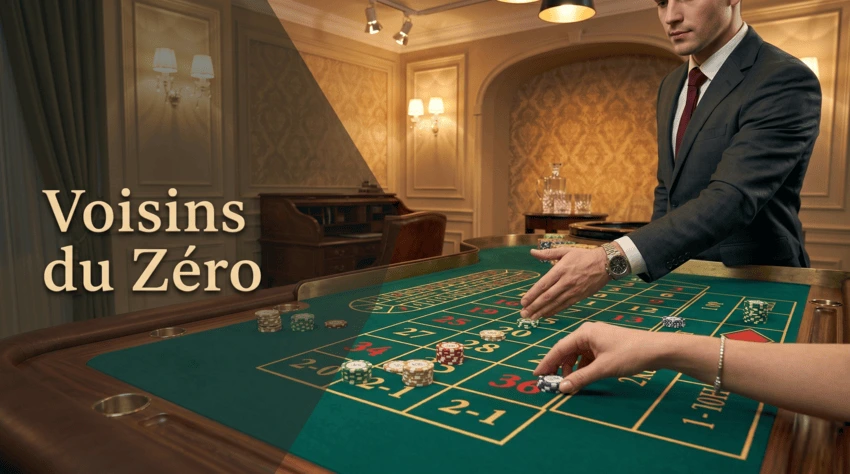
Tables that offer neighborhoods betting usually have a racetrack. That's the oval area showing numbers in wheel order, not table order. Drop your chip on any number in the racetrack. You just covered that number and two neighbors on each side.
Some online crypto platforms let you adjust how many neighbors you want on roulette. Standard coverage is two neighbors per side, so five numbers total. Some tables let you go wider with three or four neighbors each way. More neighbors equals more coverage. Just know your total stake goes up too.
Winning and losing conditions
You win when the ball hits your number or any of the four neighbors. Ball lands anywhere else? You lose. Simple as that.
Neighborhoods payouts and odds
What you get paid depends on which type of wheel you're playing. More pockets on the wheel means your five numbers are harder to hit. Payouts adjust accordingly.
Single zero wheels
European wheels give you the best return on neighborhoods bets. With 37 pockets instead of 38, your five numbers cover slightly more of the wheel. Each spin? The edge is tiny. Over a full session? It adds up.
Double zero wheels
This is the most common format in American casinos and many online platforms. That extra zero drops your win chances slightly versus European tables. Most neighborhoods side bets you'll encounter online use this wheel type.
Triple zero wheels
Some Vegas properties and online casinos offer triple-zero roulette. The third zero weakens your coverage even more, and payouts don't make up for it. If you have a choice, European or American wheels offer better value.
Neighborhoods house edge explained
Every roulette bet has a house edge. That's the math working in the casino's favor over time. Neighborhoods bets carry the same house edge as the wheel you're playing. You're basically making five straight bets at once.
On a double-zero wheel, the house edge sits around 5.26%. Single-zero tables drop that to roughly 2.7%. The neighborhoods bet doesn't change these percentages; it just spreads your action across five numbers instead of one.
Here's how neighborhoods compares to other common roulette bets:
- Outside bets (red/black, odd/even): Lower house edge, but pays even money
- Straight-up single number: Same edge as neighborhoods, but covers only one number
- Neighborhoods: Same edge, wins more frequently, smaller individual payouts
The trade-off is straightforward. Neighborhoods wins come more often. They just pay smaller amounts than hitting a single number straight up. You're not beating the math. You're just experiencing it differently.
Advantages and disadvantages of neighborhoods bets
Advantages
This bet works for players who want more action but don't want to change how much risk they're taking.
- Wider coverage: Five numbers gives you roughly five times the hit rate of a single straight bet
- Wheel-sector logic: Players who track where the ball tends to land can target specific wheel zones
- Session variety: Adds another betting layer without replacing your main approach
- Quick placement: One chip covers five numbers instead of placing five separate bets
Disadvantages
Look, there are downsides to know before you start throwing chips on the racetrack.
- No edge reduction: You're not beating the math; you're just spreading it differently
- Payout dilution: Winning more often means winning smaller amounts each time
- Bankroll drain potential: Easy to over-bet when side bets feel like "extras"
- Table availability: Not every roulette game offers neighborhoods betting
Neighborhoods betting strategy
1. Prioritize single zero roulette tables
Got a choice between wheel types? Go European. Better value long-term on any bet, neighborhoods included. The difference between 2.7% and 5.26% house edge adds up over dozens of spins.
2. Set a side bet bankroll limit
Treat neighborhoods as entertainment spending. Set aside maybe 10-20% of your bankroll for neighborhoods. Keeps it from messing with your main betting strategy. Once that portion is gone, you're done with neighborhoods for the session.
3. Balance neighborhoods with standard bets
Mix neighborhoods with outside bets like red/black or columns. Gives you variety without going all-in on one style. Outside bets give you steady small wins. Neighborhoods? That's your shot at bigger payouts when your section comes in.
Tip: If you're playing crypto roulette online, check whether the table offers adjustable neighbor counts. Go three or four neighbors deep and you're covering more wheel. Just remember your bet size climbs with it.
Common neighborhoods betting mistakes
Even experienced players fall into patterns that work against them with side bets. Here are the most frequent errors:
- Betting every spin: Neighborhoods works best as a selective play, not a constant one
- Ignoring wheel type: That extra zero on American wheels costs you over time
- Chasing losses: Side bets won't recover a bad session faster; they often accelerate losses
- Confusing table and wheel neighbors: The numbers next to each other on the felt are almost never neighbors on the wheel
- Skipping the racetrack: Placing five individual straight bets costs more in time and sometimes in minimum bet requirements
Where to play neighborhoods roulette online
Neighborhoods betting appears most often on live dealer roulette tables that include a racetrack betting interface. Many crypto roulette platforms offer this feature, particularly those running Evolution, Pragmatic Play, or Ezugi live tables.
Play crypto roulette with confidence at JB
JB's got solid live roulette tables with neighborhoods and other call bets. The racetrack interface is clean and easy to use. Crypto deposits? Fast. Withdrawals don't drag. Plus the provably fair system means you can check game outcomes yourself. If you're ready to try neighborhoods betting with fast, transparent gameplay, JB's roulette tables are built for exactly that.