Orphelins Bet in Roulette

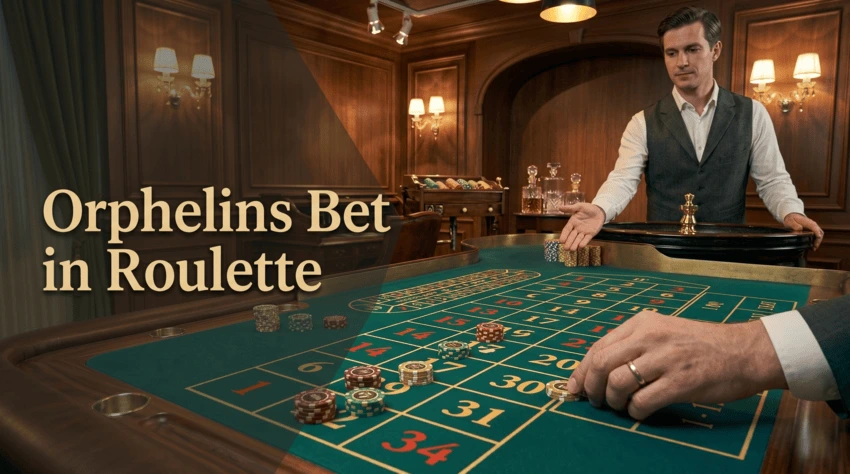
Orphelins is a five-chip roulette bet that covers eight numbers split across two wheel sections. Most players overlook it, but it's one of the smarter ways to spread your chips without going overboard. It's one of three classic French bets. The name "orphans" makes sense when you see the wheel: these eight numbers sit in the leftover spaces between the two bigger bet groups (Voisins and Tiers). Nobody else wanted them, basically.
Let's break down which numbers you're actually betting on, what you'll win when they hit, and whether this bet makes sense for your style.
What is the orphelins bet in roulette?
Orphelins is what's called a "call bet." You're covering eight wheel numbers with just five chips. Call bets (some people say "announced bets") save you time. Instead of placing each chip by hand, you announce the bet and the dealer handles it. Or online, you just click once.
You'll see orphelins on most European and French tables. It's one of the three classic French bets pros actually use. The other two? Voisins du zéro et tiers du cylindre. Here's why orphelins stands out: you're only risking five chips but covering eight numbers. That's solid wheel coverage without burning through your stack.
Most online roulette games have a racetrack layout. Look for the orphelins section. It's usually labeled right there. Click it once and all five chips land where they need to go. No manual placement required. That's why orphelins works great for beginners. You don't need to know the wheel by heart.
Orphelins meaning and why they're called orphans
"Orphelins" is just French for "orphans." The name tells you everything. Look at the wheel and you'll get it.
Voisins du Zéro grabs 17 numbers around the zero. Tiers takes another 12 on the opposite side of the wheel. Orphelins sits in the spaces those two bets don't touch. The leftover numbers. Nobody claimed them, so they're "orphans."
The 8 orphelins numbers you need to know
The orphelins bet covers exactly eight numbers: 1, 6, 9, 14, 17, 20, 31, and 34. Voisins and Tiers sit in one continuous arc. Orphelins doesn't work that way. Instead, you've got two separate clusters.
First fector numbers
The first sector contains just one number: 1. It's off on its own, separated from the other seven. Since number 1 stands alone, you bet it straight-up. One chip, right on that number.
Second sector numbers
The second sector holds the remaining seven numbers: 6, 9, 14, 17, 20, 31, and 34. These sit on the wheel's opposite side from that lone number 1. You cover all seven with four split bets.
Here's where your chips go:
- Number 1: 1 chip straight-up
- Numbers 6 and 9: 1 chip split between both
- Numbers 14 and 17: 1 chip split between both
- Numbers 17 and 20: 1 chip split between both
- Numbers 31 and 34: 1 chip split between both
See that? Number 17 shows up twice. It's in two different splits. That matters when you're counting your winnings.
Where orphelins sit on the roulette wheel
Look, it helps to know where these numbers actually sit on the wheel. Makes the whole bet click. The eight numbers occupy two distinct gaps on the European wheel rather than one continuous arc.
The two orphelins sectors
Think of the wheel in three zones. Voisins wraps around that green zero. It grabs a big chunk of the wheel. Tiers sits on the other side, taking another big section. Orphelins fills what's left, the two gaps between those bigger bets.
One tiny section is just number 1. The other section, on the wheel's far side, has those seven numbers bunched together.
How to read the racetrack layout
European roulette tables typically display an oval "racetrack" alongside the main betting grid. The racetrack follows the wheel's number order and labels each call bet section.
You'll see the orphelins section marked on the racetrack, labeled "Orphelins" or sometimes "Orphans." Click that section on a digital table and your five chips drop right where they need to go. Crypto roulette tables at modern online casinos generally include this racetrack interface, making call bets straightforward even for first-time players.
How to place an orphelins bet
You can place orphelins two ways. Online or live table. That changes how you do it.
1. Using the racetrack for one-click betting
Digital tables? The racetrack makes this dead simple. Find the "Orphelins" label on that oval and click. The software drops all five chips where they belong.
No mistakes, and you're betting way faster. For online, it's the way to go.
2. Placing chips manually on the table
Playing live or just want to place chips yourself? Here's where they go:
- 1 chip straight-up on 1
- 1 chip on the line between 6 and 9 (split bet)
- 1 chip on the line between 14 and 17 (split bet)
- 1 chip on the line between 17 and 20 (split bet)
- 1 chip on the line between 31 and 34 (split bet)
Watch this: number 17 gets hit by two different splits. When 17 hits, both those splits pay. Nice bonus.
Orphelins bet payouts and winning odds
What you win depends on which number hits. You're mixing bet types here, so your payout changes depending on what lands.
Straight-up payout on number 1
Number 1 hits? You're collecting 35 to 1. That one chip you put on 1 brings back 35 chips plus your original bet. Your other four chips? Gone.
Split bet payouts on four pairs
Hit any split number, 6, 9, 14, 20, 31, or 34, and you're getting 17 to 1. That's 17 chips plus your bet coming back. The other four? Lost.
Now, 17 is different. Two splits cover 17 (the 14/17 and 17/20), so when it hits, both bets pay. You're getting 17 to 1 twice, but you lose those other three chips.
Probability of hitting an orphelins number
European wheel has 37 pockets. You're covering 8 with orphelins. That's about 21.6% of the wheel each spin.
House edge stays at 2.7% no matter what you bet. European wheels don't change that. Call bets don't mess with the math.
Orphelins vs voisins vs tiers in roulette
These three call bets split the wheel into overlapping sections. Here's the breakdown:
Orphelins costs the least chips but still grabs a decent chunk of the wheel. Trade-off? You're covering fewer wheels than Voisins or Tiers.
Orphelins roulette strategy for better results
No bet pattern beats the house edge. But some tactics help your bankroll last longer and smooth out the swings.
1. Pair orphelins with neighbor bets
Neighbor bets cover the numbers sitting next to your main target on the wheel. Pair orphelins with neighbor bets on certain numbers and you'll cover more wheel without jumping to a totally different setup. Good move if you want more coverage but don't want to drop nine chips on Voisins.
2. Stick to flat betting for bankroll control
Flat betting? Same bet size every spin. Orphelins already splits your money across eight numbers. Keeping your bet size steady makes your sessions easier to track. Changing your bet size after wins or losses won't shift the odds. Doesn't work that way.
3. Avoid progressive systems on sector bets
Martingale and other progression systems get costly fast with call bets. Doubling five chips after each loss adds up way quicker than doubling one chip. With five chips in play, aggressive progressions just don't make sense.
Common orphelins betting mistakes to avoid
New to call bets? Watch for these mistakes. Spot them early and you'll save yourself some cash.
Ignoring the house edge
Call bets look fancy, but they won't cut the house edge. That 2.7% house edge on European roulette? It's the same for orphelins, straight bets, even-money bets—all of it. Covering wheel sectors is about style, not beating the math.
Overcommitting to one wheel sector
Some players hammer orphelins over and over, thinking it's "due" after a few losses. Every spin stands alone. What hit last spin doesn't matter. The wheel doesn't remember anything.
Misreading the call bet interface
Racetrack layouts change depending on which software you're using. Some sites need you to confirm. Others drop your bet the second you click. Check where your chips landed before that wheel spins, especially if it's a new table.