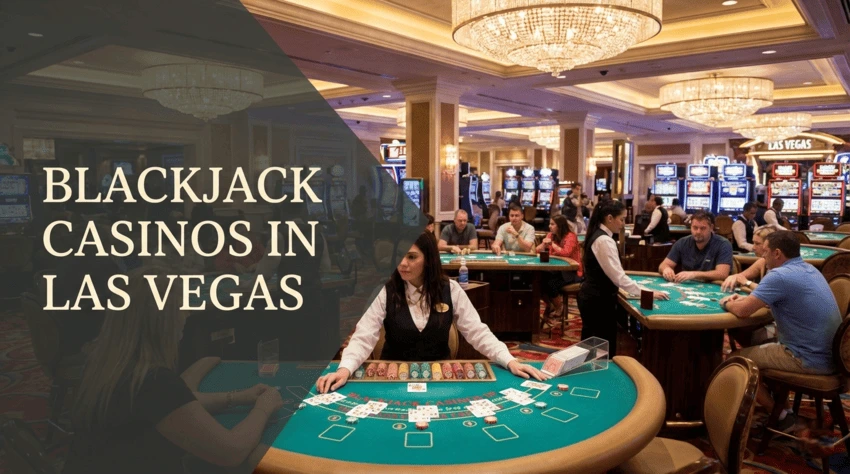
Pick the wrong blackjack table in Vegas, and you'll burn through cash twice as fast. The table you sit at matters more than most people realize. Walk one block down the Strip, and the house edge can swing by over 1%. That's the difference between losing $50 or $100 in an afternoon.
Three things separate good blackjack from bad: how much they pay you, what rules they use, and what it costs to sit down. Aria and Treasure Island treat blackjack players right on the Strip. Downtown, El Cortez runs some of the best odds you'll find anywhere in Vegas. For players willing to venture off-Strip, Jerry's Nugget attracts locals who know the math.
Two identical-looking tables can have completely different odds. You won't know unless you check the fine print. I've seen tables side by side where one has double the house edge of the other. Same dealer, same cards, totally different game. These casinos actually care about blackjack instead of just slapping tables on the floor.
Serious players love Aria because they keep six-deck rules that don't screw you over. Most tables make the dealer stand on soft 17, and that cuts the house edge compared to places where they hit.
El Cortez downtown still runs single and double-deck games with rules most casinos ditched years ago. You'll pay less to sit down, and they still pay 3:2 like blackjack is supposed to work.
If you can afford $50 hands, Treasure Island has some of the Strip's best blackjack. Their double-deck games let you re-split aces and double after splitting. Both rules help you, not the house.
The Venetian splits the difference. You get decent atmosphere without giving up too much on the odds. Rules don't change table to table, so you won't waste time checking every sign on the felt.
This off-Strip local casino regularly deals $5 blackjack with 3:2 payouts. It's a 15-minute drive from the Strip. Worth it if you care about house edge more than fancy cocktail service.
Not all blackjack tables play the same. What's printed on that felt tells you exactly how much the casino is taking from you. Learn a few rule differences, and you'll know which tables to skip before you even sit down.
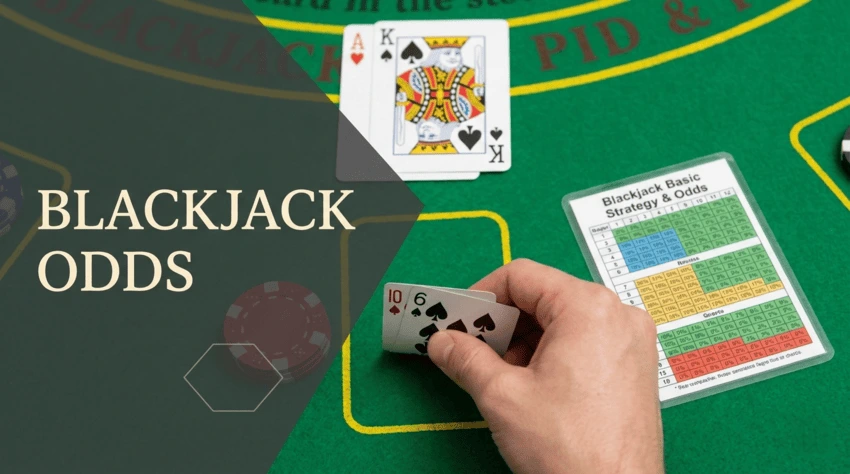
When you get dealt an ace and a ten-value card off the top, that's a natural blackjack. Used to always pay 3:2. On a $10 bet, that's $15 in winnings. Vegas casinos started paying 6:5 at cheap tables, so your $10 blackjack only wins you $12 instead of $15. Total scam.
Play a few hours, and that gap costs you real money. 6:5 tables add 1.4% to the house edge. That's huge when a good game runs under 0.5%.
Soft 17 is when the dealer has an ace counting as 11 plus cards adding up to 6. Dealer stands on soft 17? Better odds for you. Dealer hits? Worse odds. Look for "Dealer Stands on Soft 17" printed on the felt before sitting down.
Some tables let you double on any two cards. Others only let you double on 10 or 11. More options mean better odds for you.
Surrender lets you give up half your bet when you're stuck with a bad hand. Late surrender (after the dealer checks for blackjack) shows up at some Vegas tables. Surrender the right hands against dealer 9, 10, or ace, and you'll cut the house edge.
Catch another ace after splitting aces? Some casinos let you split again. Not many places do this anymore. Treasure Island still does, plus a couple of others.
Minimums change depending on what time you show up and how packed the casino is. Weekday mornings have the cheapest tables. Friday and Saturday nights? Minimums go up everywhere.
Poker Palace in North Las Vegas sometimes has $3 blackjack tables. $3 tables barely exist and come with catches. But if you want the cheapest game in Vegas, this is it.
Your best shot at $5 blackjack is downtown or off-Strip. Jerry's Nugget and El Cortez both pay 3:2 at five bucks, and you won't find that many places anymore.
Most middling Strip casinos start at $10 or $15 when it's slow. The problem is that half these tables pay 6:5, so you're not actually saving money.
Pay more per hand, and you sometimes get better rules to make up for it. Playing $25 hands? Make sure you're getting 3:,2, and dealer stands on soft 17.
Strip blackjack and downtown blackjack are two different games. Pick based on what matters more: the vibe or your wallet.
Aria, Bellagio, and Treasure Island run the best blackjack on the Strip. Tons of Strip casinos switched to 6:5 on cheap tables. Check the felt before you sit.
El Cortez has the best blackjack downtown. Golden Gate and The D keep decent rules and charge less than Strip casinos.
Jerry's Nugget, South Point, and Station Casinos target locals who know what good odds look like. Off-Strip casinos fight over who has the best odds, not who has the fanciest carpet. Works out if you care about winning.
Staying away from bad tables matters just as much as finding good ones. Some tables look normal until you check the house edge and realize you're getting screwed.
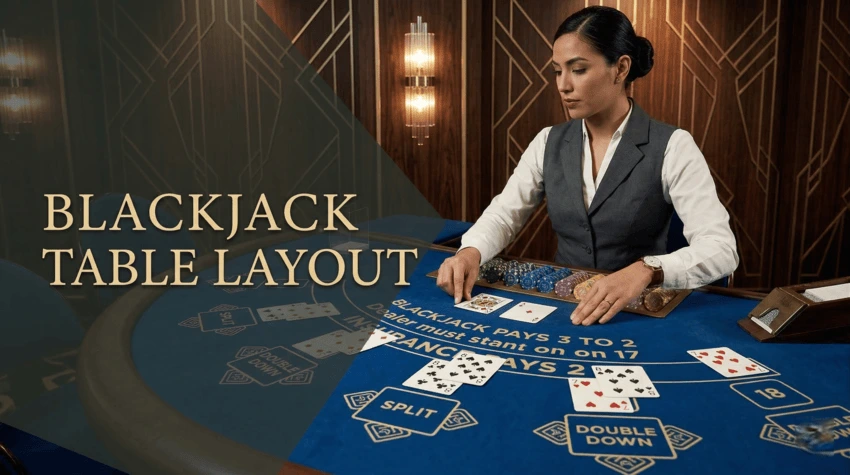
Check the payout first. Don't sit down blind. The felt or a placard will display "Blackjack Pays 3 to 2" or "Blackjack Pays 6 to 5." Just walk past the 6:5 tables. The easiest way to keep more money.
Continuous shuffling machines (CSMs) put the cards right back in the deck after every hand. CSMs kill deck penetration and wreck any shot at counting cards. Some players hate CSMs just because. The house edge stays about the same as regular shoe games.
Insurance, Perfect Pairs, and 21+3 side bets have way worse odds than the main game. Good blackjack runs under 0.5% house edge. Side bets? Over 5%. Skip the side bets, and you'll lose less.
House edge is the casino's math advantage that grinds you down over time. 0.5% house edge means the casino takes 50 cents out of every hundred bucks you bet. Lower house edge, better shot at winning.
A few things change the house edge:
Fewer decks help you because you'll hit blackjack a little more often. A double-deck with good rules can drop the house edge under 0.4%. That's great for Vegas.
You'll see six-deck games everywhere in Vegas. Six-deck can still work if the other rules don't suck. Six-deck with dealer stands on soft 17, 3:2, and DAS beats double-deck with garbage rules.
Play long enough, and the house edge tells you how much you're going to lose. 0.5% edge on $50 hands costs you about $25 every hundred hands. Better rules let you play longer and lose less.
Locals do a few things differently. Here's what they know.
Check the placard on the table. Minimums change all day. Sitting at a $25 table when you thought it was $10 sucks.
Look for "Blackjack Pays 3 to 2" on the felt. That one check saves you more money than anything else you'll do at the table.
Basic strategy tells you the right mathematical play for every hand you can get. You can use strategy cards at most Vegas tables. They cut the house edge way down compared to guessing.
Tip the dealer. Makes the whole table feel better. Throw them a buck or two per session, or put a bet up for them sometimes.
When the dealer shows an ace, you'll be offered insurance. Insurance looks good but the house edge is terrible. Never take insurance. The math says skip it every time.
Vegas blackjack costs you plane tickets, hotel rooms, and you'll hit tables with rules that screw you over. While blackjack remains the most popular table game, some players also explore poker for variety. Online blackjack, particularly at crypto casinos, frequently offers lower house edges and more player-friendly conditions.
Bitcoin blackjack and live online blackjack have grown popular among players who want the table game experience without the Vegas overhead. Platforms like JB offer fast withdrawals, transparent odds, and table depth that rivals physical casinos.