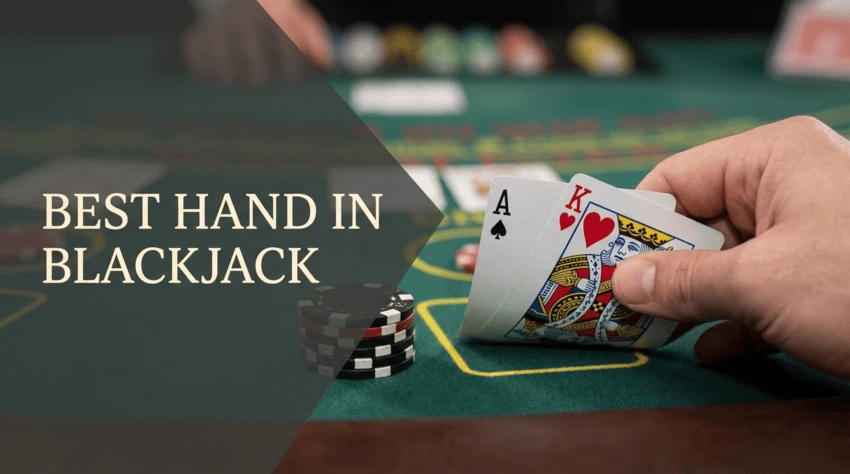
You want a natural 21. That's an Ace plus any 10-value card. Most tables pay you 3:2 on this one, and you collect right away. Unless the dealer also hits blackjack. Then it's a push.
We're covering everything: which hands actually win, what separates hard from soft totals, and the right moves for both your best and worst cards.
Natural blackjack means Ace plus anything worth 10: the 10 itself, or any Jack, Queen, or King. You're looking at 21 on two cards. Bet $10, walk away with $25 total. That's your $10 back plus $15 profit. Beat everything except another natural. If the dealer also gets blackjack? Push. You get your money back, and nobody wins.
What makes a natural blackjack so valuable? Two things. You cash out right away. No decisions to make. And that 3:2 payout beats the standard 1:1 you'd get on anything else.
Sure, hard 20 is solid. Doubling on 11 can pay off. But nothing else gives you an instant win AND a bonus payout.
Let's talk blackjack card values first. Everything you do depends on what your cards add up to. Every decision at the table depends on knowing what your cards add up to.
Cards 2 through 10? Face value. Seven is seven. Three is three. Easy. Nothing complicated here.
Jacks, Queens, and Kings all count as 10. You'll see more 10-value cards than anything else, which changes how you play. Four cards are worth 10 for every Ace in the deck: the 10, plus Jack, Queen, King per suit.
The Ace does what you need it to. Call it 1 or 11, whatever keeps you in the game. Ace and 6? You've got 7 or 17. This flexibility is why Aces power the strongest hands in blackjack.
Some hands win. Others make you sweat. Some put you in a strong position from the start, while others leave you hoping the dealer busts. Here's how the best starting hands stack up:
Natural blackjack wins automatically and pays extra. Nothing else even compares.
Two 10-value cards? That's hard 20. Beats almost everything except dealer 21. Always stand. Hitting a 20 hoping for an Ace is one of the fastest ways to lose money at the blackjack table.
Ace plus 9 is also 20. The Ace gives you flexibility, but you're standing anyway. Hard 20 versus soft 20? Doesn't really matter at this point. You're standing either way.
Hard 11 (like 5+6 or 8+3) is where you double down. Doubling? Match your bet, get one more card. Deck's loaded with 10s. Good chance you hit 21. Put more money down while the odds work for you.
Soft 18 (Ace + 7) fools new players. Looks safe, and sometimes it is. What you do next depends entirely on the dealer's card. Dealer shows 4, 5, or 6? Double. Dealer shows strength? Stand or hit. Pay attention to this one. It bites back if you autopilot.
Hard versus soft changes everything. Get this down and the rest of blackjack makes way more sense.
Hard hand? No Ace, or an Ace stuck counting as 1 so you don't bust. 10+6? Hard 16. 10+5+A? Also hard 16. The Ace has to be 1.
Hard hands are riskier. One bad card and you bust.
Soft hand means an Ace counting as 11. Ace+6 is soft 17. So is Ace+4+2.
The key difference? Can't bust on the next card. Draw a 10 on soft 17? Ace drops to 1, you've got hard 17. Still alive.
Soft hands let you push without the risk of busting. Double on soft 18 against certain dealer cards. Bad draw? You're still in it. Players who know what they're doing pick soft hands every time.
Some hands just suck. Losing less on garbage matters as much as winning more on good cards.
Hard 16 is the worst hand you can get. Hit? Might bust. Stand? The dealer probably beats you with 17 or better. Dealer shows 7 or better? Hit. Dealer shows 2-6? Stand. Both options stink. Hard 16 loses either way. You're just trying to bleed less money.
Hard 15 is almost as bad. Same logic: hit when dealer's strong, stand when dealer's weak.
This trips people up. Dealer showing 4, 5, or 6? Stand on hard 12. Dealer shows 2 or 3? Hit. It's about bust probability. What the dealer shows changes their chances of busting. Dealer's got 4, 5, or 6? They'll probably bust. Let them.
You've got four moves: hit, stand, double down, or split. Here's when each applies.
Double when the math works for you. Best times:
Splitting makes two hands from one. Two rules make this easy:
The math behind blackjack hands stays the same whether you're playing with dollars or bitcoin, at live dealer tables or RNG table games. Crypto changes everything else: faster deposits, instant cashouts, and provably fair systems.
Provably fair tech? Crypto that proves the casino didn't rig your hand. After each hand, check the result against a hash from before the deal. For players who value transparency, this adds a layer of trust that traditional online casinos can't match.
Now that you understand which hands carry the most value and how to play them, the next step is putting that knowledge into practice at the blackjack tables. JB casino offers fast games, instant crypto moves, and an interface that stays out of your way.
Five-card trick (or "5-Card Charlie") means five cards without busting wins automatically. It's a house rule. Most tables don't use it. Check the rules first.
Always stand on hard 17. Hard 16? Hit if dealer shows 7+, stand on 2-6. Soft 17 (Ace + 6)? Hit. Can't bust anyway.
Some casinos pay bonuses for three 7s. Usually a side bet or promo thing. Not standard. Check if your casino has it.
Two hands doesn't change the odds. It cranks up the variance. Bigger wins, bigger losses. Some players like the action. Others can't focus on both.
Tie? That's a push. Get your bet back. Exception: your natural blackjack beats dealer's regular 21. You win that one.