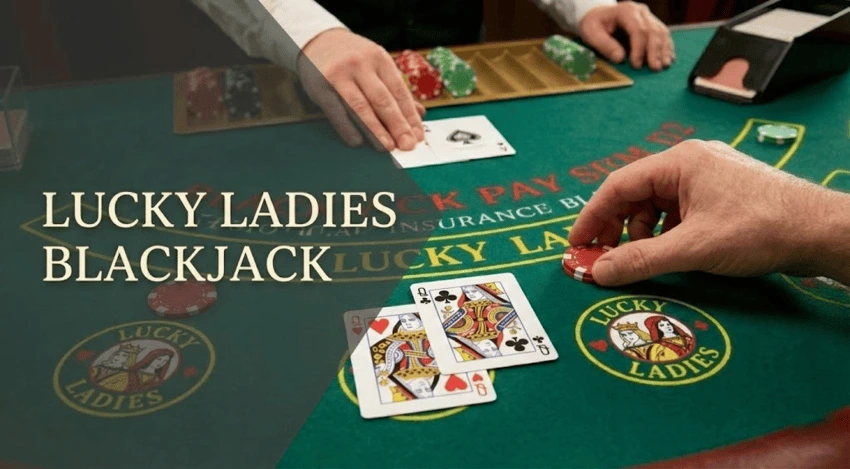
Here's the basics: you're betting that your opening two cards add up to 20. You make the bet before anyone gets dealt anything. Once your first two cards hit the felt, you either win or you don't. The side bet is over the second you see your cards. What you do next with your blackjack hand doesn't matter for this.
The name comes from the top-paying combination: a pair of queens of hearts. When you get those queens and the dealer shows blackjack? That's when the real money shows up. But you don't need queens to win. Any two cards adding up to 20 qualify, though the payout varies based on how you get there.
The bet started in Washington state casinos. Now? You'll find it at pretty much every blackjack table, whether you're playing in person or online casino. People like it because there's zero strategy involved. You just wait to see if lightning strikes.
The betting process takes just a few seconds. Look for the lucky ladies circle on the table. Drop your chip there before the cards get dealt. It's sitting right next to your regular bet, but the two don't affect each other at all.
Once you receive your first two cards, the side bet resolves. Hit 20? Check the paytable to see what you won. If they don't, the dealer collects your side bet. From there, your blackjack hand continues as normal. What you do with your blackjack hand after that doesn't change anything for the side bet. They're totally separate.
The harder it is to hit a specific 20, the more you get paid. Let's go through each winning hand, starting with the easiest to hit:
The queen of hearts pair represents the "lucky ladies" the bet is named after. If the dealer also has blackjack when you get those queens, the payout explodes. But good luck seeing that happen.
Different casinos pay different amounts. Deck count matters too. Always check the paytable before you start playing. What looks like a tiny difference actually adds up.
Those numbers are what you'll see at most casinos. What looks like a small difference, say 4:1 versus 6:1 on any 20, adds up over a session.
Six or eight decks is standard, and most places pay somewhere in the middle of those ranges. A suited 20 typically pays 9:1, while a matched 20 often returns 19:1. The base "any 20" payout hovers around 4:1 at most venues, though some tables offer 6:1.
This is the headline payout, often advertised prominently on the table felt. The catch? You need both queens of hearts in your hand, and the dealer needs to pull blackjack at the exact same time. In a six-deck game, this combination appears roughly once every 30,000 hands. It's the lottery ticket of blackjack side bets.
The house edge on this bet is brutal compared to regular blackjack. Depending on the paytable and deck count, the edge typically ranges from around 17% to over 24%.
For comparison, blackjack played with proper basic strategy offers a house edge under 1%. Big difference. That's why people who know what they're doing only throw this bet out once in a while for fun.
Three things change how bad the edge gets:
None of this makes the bet inherently bad. You're paying extra for a shot at a massive payout that almost never hits.
Some places jazz up the bet with progressive jackpots or bonus payouts. Your swings get wilder, but the top prizes go way up.
With progressive versions, part of every bet goes into a jackpot that keeps climbing. Hit the queens with dealer blackjack, and you win whatever's in the progressive pool. At busy tables, that can hit six figures.
Catch? The regular payouts get cut a bit to pay for the jackpot. You take lower regular payouts in exchange for a crack at the big jackpot.
Bonus versions let you win on more hands than just 20s. You might get paid for any pair, suited cards, or other high hands that aren't 20.
More ways to win sound great until you see the house edge. It's even worse on these versions. Winning more often doesn't mean you're losing less money.
New players make the same mistakes over and over. Don't be that person.
The math works against consistent side betting. At a 17%+ house edge, betting this every hand is just burning money faster than regular blackjack would. People who've been playing a while only throw this bet out occasionally, not every single hand.
Two tables in the same casino might offer different lucky ladies paytables. The difference between 6:1 and 4:1 on any 20 adds up quickly. A quick glance at the posted odds before sitting down takes three seconds and can make a difference.
The Queen of hearts pair with dealer blackjack makes for great marketing. It also appears roughly once per 30,000 hands. Don't sit down thinking you're going to hit this. You'll just get frustrated. The more realistic wins come from suited and matched 20s.
Tip: If you enjoy the lucky ladies side bet, consider setting a separate bankroll for it. Decide beforehand how many times you'll place the wager per session, then stick to that number regardless of results.
Live casino and RNG blackjack tables at JB offer the lucky ladies side bet with fast crypto deposits, instant withdrawals, and provably fair gameplay.
Want to play with Bitcoin? JB runs 24/7, the paytables are posted clearly, and you can pull your winnings out whenever.






.webp)