.webp)
All baccarat games have one thing in common: getting as close to nine as possible. Some versions give you control, others lock you into spectator mode, and each one tweaks the betting setup differently. Three versions started it all: Punto Banco, Chemin de Fer, and Baccarat Banque. Today's casinos took those classics and added speed rounds, multipliers, and commission-free tables to keep things interesting.
Here's what you need to know about each version you'll find at crypto casinos and online tables. We'll cover the classics, the modern twists like Lightning and EZ baccarat, and which one fits how you play.
Look, every baccarat game wants you to hit nine. That part doesn't change. What does change? How much say you get in the action, what the table looks like, and which bets you can make. Punto Banco, Chemin de Fer, and Baccarat Banque are the big three. The difference? Some let you make real choices during the hand. Others just have you pick a side and watch what happens.
When most people say "baccarat," they're actually talking about Punto Banco, where the cards determine every move automatically. Chemin de Fer and Baccarat Banque flip that script. You actually decide whether to take another card or stand. Same scoring across all three. But playing them? Completely different vibe.
Every modern baccarat game you'll find at a crypto casino or land-based venue traces back to one of three original formats. Biggest difference? Do you control the cards, or do they control you?
Punto Banco is what most players picture when they think of baccarat. The dealer runs the whole show here. Fixed rules decide if anyone gets a third card. You just sit back and watch. Your only job? Pick Player, Banker, or Tie. That's it.
Not having to make decisions speeds everything up. Beginners love it for exactly that reason. No strategy to memorize. The rules handle themselves. Walk into any casino or open any crypto platform. This is what you'll find. Punto Banco runs the show everywhere.
Chemin de Fer shifts control to the players. Players take turns banking. Both the banker and the person playing the punto side get to choose: draw a third card or stand pat.
Things move more slowly than Punto Banco. That's the trade-off for getting real decisions to make. You'll find Chemin de Fer in European high-roller rooms, not online. The player-vs-player setup doesn't work for standard digital tables.
Same idea as Chemin de Fer, one twist: one player banks the entire shoe instead of switching every hand. Changes the whole feel when one person controls the bank for that long.
Like Chemin de Fer, Baccarat Banque is almost exclusively a land-based game. Finding it online is rare, and most crypto casinos don't offer it at all.
While the classic versions established the foundation, modern baccarat variations are what you'll actually encounter when playing crypto baccarat today. They all start with Punto Banco's auto-play setup, then throw in something different. Faster rounds, new bet types, tweaked payouts.
Take regular Punto Banco and shrink it. That's mini baccarat. Smaller table. Lower stakes. One dealer running everything. Rules stay the same. Just a different setup.
New to baccarat? Start here. Mini tables feel way less intimidating. Lower limits mean you're not sweating every hand. And things move fast enough that you get the hang of it without sitting there forever.
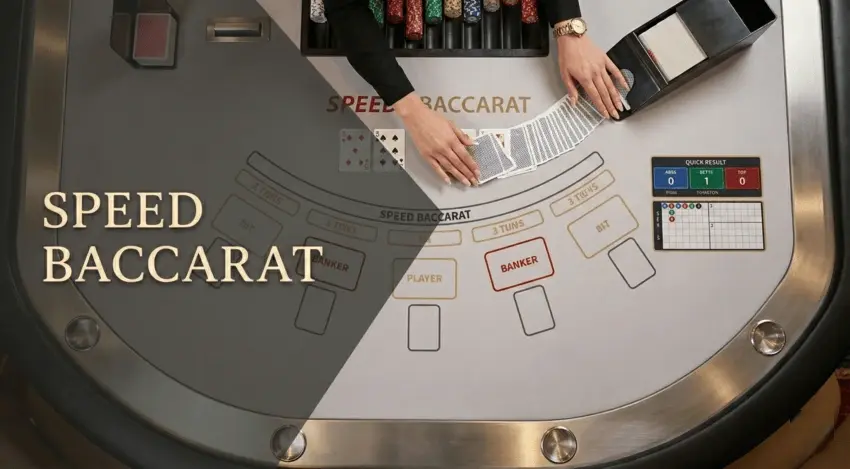
Same rules as regular Punto Banco. Everything just happens faster. Cards are dealt face-up immediately, and each round finishes in roughly 27 seconds.
More hands per hour. Less time to think. Pretty simple trade. Got 20 minutes? Speed baccarat tables pack in way more action than standard games.
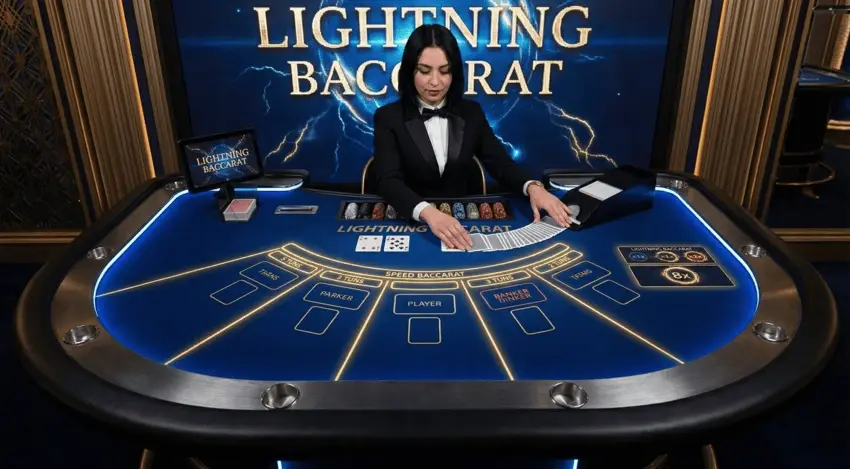
Lightning baccarat throws random multipliers into the mix (up to 512x) on specific cards before each round starts. Hit one of those multiplied cards in a winning hand? Your payout jumps.
The excitement comes with a catch. The casino charges for those multipliers. The house edge sits higher than standard baccarat. Way more volatile. You can win bigger, but you can also burn through a small bankroll fast.
EZ baccarat kills the 5% commission on Banker wins. Instead of taking commission, certain hands just push. You get your bet back, no profit.
House edge works out about the same. Just built differently. Not tracking commission in your head feels easier, even if the math ends up similar.
Squeeze baccarat's all theater. Same odds, way more drama. The dealer slowly peels back the cards, building tension before revealing the values. Rules and payouts? Same as regular Punto Banco.
Love the slow reveal? Squeeze tables are your thing. If you're focused purely on efficiency, though, the slower pace might feel like unnecessary theater.
Tables get labeled mini, midi, or big table. Those names describe the table setup and vibe, not the rules. The game plays the same either way.
Mini baccarat uses the smallest table format, seats fewer players, and moves quickly. Dealer handles everything. Stakes usually start lower. Most online and crypto tables? They're mini format.
Midi sits right in the middle. Big difference? You get to touch and squeeze your own cards. Pace splits the difference. Faster than a big table, slower than a mini.
The big table is where the high rollers play. The large table holds more players. Multiple dealers run the show. You handle your own cards. Rounds drag. Minimums jump. The whole thing feels ceremonial.
Regular baccarat takes 5% off winning Banker bets. Why the commission? Banker wins more often than Player. Without that cut, you'd have the edge.
No commission baccarat drops the fee. Payouts change instead. Most common tweak? Banker wins with a six pay half instead of even money.
House edge works out basically the same either way. Pick based on what bugs you less. Tracking commission in your head or remembering adjusted payouts.
Most baccarat games throw in side bets. Extra action beyond Player, Banker, and Tie. Same trade every time. Worse odds, bigger payouts.
Side bets make things interesting. Just know the house edge jumps way up. Don't build your game around them. Use side bets for fun, not as your main action.
Want the best odds? Standard Punto Banco, Banker bet. Nothing else beats it. Player bet comes close. Tie bet? House edge jumps way up. Anyone who's played a while skips it.
Lightning baccarat and multiplier games cost more. Those big potential payouts get baked into the house edge. Side bets? House advantage gets even worse.
Care about odds? Stick with standard Punto Banco and bet Banker. Want bigger swings? Lightning baccarat and multiplier games hit harder both ways.
Most crypto platforms give you two options: live dealers or RNG. Pick based on what matters to you.
RNG works if you want speed and proof that the game's fair. Live tables appeal to players who prefer watching real cards and don't mind a slightly slower pace.
Pick based on what you actually care about. Speed? Simplicity? More involvement?
Speed baccarat or mini baccarat. Both move fast with zero dead time. Perfect for quick sessions.
Mini baccarat or EZ baccarat. Easy rules, low stakes, no commission math. Won't feel overwhelming.
Chemin de Fer (when available) or squeeze baccarat. More control or more theater, depending on which version. Better if you want to feel involved.
JB runs multiple baccarat versions. Crypto deposits hit instantly, withdrawals move fast. RNG tables with provably fair tech, live squeeze games, and different stakes. Pretty much everything's there. Explore baccarat at JB and find your table.
Punto Banco, Banker bet. Best odds you'll find in any baccarat game. Math doesn't lie.
EZ baccarat kills commission but tweaks payouts. House edge ends up about the same. No real math advantage either way. Just pick whichever payout setup you like better.
American baccarat? That's usually Punto Banco. Fixed rules control every card. European versions like Chemin de Fer let you make choices. American format doesn't.
Punto Banco, mini baccarat, Lightning, EZ? Most online and crypto casinos have those. Chemin de Fer and Baccarat Banque? Almost never online. The player-controlled setup doesn't work for digital tables.
The 3/8 rule covers when to draw. Player draws on 0-5, stands on 6-7. Eight or nine? That's a natural. Round's over. Banker rules get more complicated. Depends on what the Player pulled.