Chemin de Fer is the original form of baccarat, a player-banked variant where you make decisions rather than watching cards flip according to fixed rules. Unlike Punto Banco, you're making real calls here. The banker spot moves around the table, so everyone gets a turn running the show.
Here's how it works, why it's different, and whether it's worth tracking down.
Chemin de Fer flips the script. You're playing against another person at the table, not the casino. One player banks the action while everyone else tries to beat them. Here's what matters: in Chemin de Fer, you actually choose whether to hit or stand. Punto Banco just runs on autopilot with zero player input.
Six decks in play, same goal as always: hit 9 or get close. Two things set it apart: the bank moves around the table, and you're actually making calls that matter.
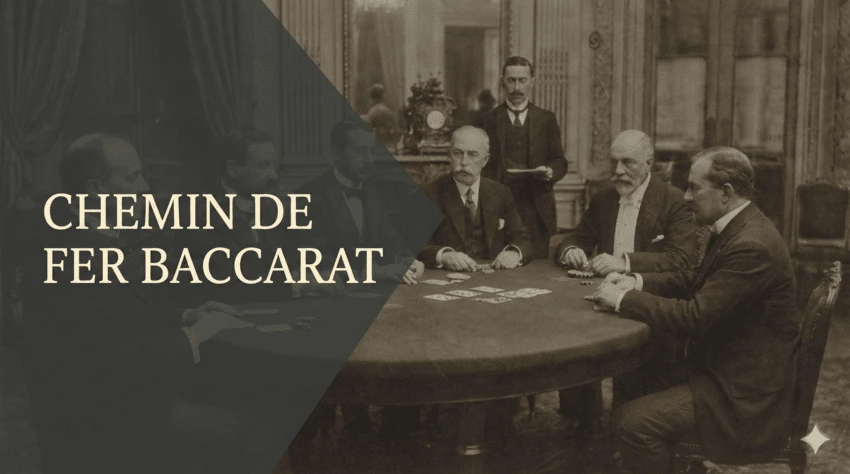
This game started in 19th-century France and caught on fast with rich folks and aristocrats. The name translates to "railway" in French, likely referencing how the card shoe travels around the table from player to player, much like train cars moving along a track.
James Bond cemented the game's sophisticated reputation. In Ian Fleming's original Casino Royale novel and several early Bond films, 007 plays Chemin de Fer rather than the Texas Hold'em featured in the 2006 movie adaptation. That fancy reputation stuck. The problem is, you'll struggle to find a table unless you're hitting up high-end European casinos.
If you've played baccarat online or at most online casinos, you've almost certainly played Punto Banco. Once you see the difference, you'll get why people hunt this version down.
It boils down to one thing: choice. Punto Banco? The dealer is following a chart. Zero flexibility. In Chemin de Fer, you look at your cards and decide for yourself.
This really shows up when you're sitting on 5. Hit or stay? Both work. That's the call you get to make. That one choice is where you can actually outplay someone.
You're not fighting the casino here. You're going head-to-head with whoever's banking that round. The banker pays winning bets out of their own money. Lose a hand? The bank moves to the next player.
Banking is risky. You could lose big. But you could also clean up. That's what keeps each hand interesting.
The house still gets paid. They take 5% off the banker's wins each hand. That's where the casino's edge comes from. You're playing each other, but they're still making money.
Each round moves through the same steps. Get the rhythm down, and hands fly by.
First banker? Usually, whoever bids the highest or volunteers the biggest stake. Some tables just give it to whoever's in a certain seat. After that, the bank moves whenever the banker loses.
Players wager against the banker's hand. The biggest bettor gets the player hand and plays for everyone.
Calling "banco" means matching the entire bank in a single bet, a bold move that gives you exclusive control of the player hand for that round. If you win a banco bet and want to do it again, you can call "banco suivi" to claim priority on the next round.
Banker deals two cards face down to the player and two to themselves. Cards come from a six-deck shoe (called a sabot). Nobody has shown their cards yet.
Player checks their cards. Hit or stay? Your call. Most people hit on 0-4, stay on 6-7. The 5? That's where it gets interesting.
This is what makes it different from Punto Banco. You're not following a chart; you're making a judgment call.
Player goes, then the banker flips their cards and decides. Banker's got an edge here. They know if you hit, maybe even saw what you pulled.
That information gap matters. Smart banker uses what they see. The advantage isn't huge, but it's there.
The hand closest to 9 wins. You win? Banker pays you even money from their stack. Banker wins? They take everyone's losing bets. Tie? Everyone gets their bet back.
Scoring works identically to other baccarat variants. Only the last digit of your total counts, so there's no busting like in blackjack.
Got a 7 and 8? That's 15, which counts as 5. A hand of 4 and 5 totals 9, the best possible score, often called a "natural."
You can play however you want. But players who know what they're doing stick to guidelines that work. Nothing's required like in Punto Banco. This is just what works most of the time.
Most players hit on 0-4, stay on 6-7. The 5 is where it gets tricky. Either move works.
Some players always draw on 5. Others always stand. Some mix it up based on gut feel or what the banker's been doing. No right answer. That's why this beats the autopilot version.
Banker's call is trickier since they go last. Player stood? Banker usually think the same way. Player hit? Banker looks at what they pulled and adjusts.
Say the player pulled a low card. Banker might stay on a borderline hand. The edge is real. Just not huge.
Winning player bets pay 1:1. House edge here runs about 1.2% if everyone plays smart. That comes from the commission on banker wins.
Punto Banco's banker bet is actually better at 1.06%. But here, skill matters. Your results depend on how well you play.
The problem is finding a table. You'll have to hunt down fancy casinos for Chemin de Fer. Punto Banco? Every casino's got it, crypto spots included.
Strategy here is small moves, not big plays. You don't make many calls, but the right ones matter.
This choice is where you show what you've got. No perfect play here. That's why it's interesting.
Some players watch if the banker hits aggressively, then adjust. Others go with gut instinct. Both work. Just have a reason instead of guessing blindly.
Human bankers develop habits. Does this banker always draw on 5? Do they play conservatively after a loss? Watching patterns gives you info that the numbers won't show.
Punto Banco can't do this. Here, paying attention pays off.
Banking means you're covering multiple bets at once. Make sure you've got enough to survive a losing streak before you take it.
You can win big. You can also lose fast. Lose a few hands with a short stack? You're done.
Calling Banco is dramatic but not always smart. Save it for when you've got a real read or the pot's big enough to be worth it.
Doing it for show tends to end poorly. Doing it with purpose can be profitable.
You won't find real Chemin de Fer online much. The player-vs-player banking setup doesn't work well with regular casino software. Most platforms offer Punto Banco instead, sometimes with live dealers to preserve the social atmosphere.
Crypto baccarat sites give you fast games and clear odds. Just not the Chemin de Fer version. What makes baccarat good (fast rounds, simple bets) stays the same no matter which version you play.
Want to get better? Start with the right setup. JB crypto casino has multiple baccarat tables. Deposits are fast, withdrawals are instant, and you can verify every hand with their provably fair system. Learning basics or trying new versions? The site keeps it straightforward.
The French name means "railway," most likely describing how the shoe passes around the table like train cars on a track. Others say it's about the pace. This game moved faster than other card games back then.
Tables fit twelve players, but only one player hand gets dealt per round. The highest bettor represents all players betting against the banker at this classic table game.
Card counting barely helps in Chemin de Fer. Six decks, frequent shuffles. Plus, the edge you'd get is way smaller than in blackjack. Not worth the hassle for what you'd gain.
Real Chemin de Fer is rare online. The player-banking setup doesn't work well digitally. Most crypto casinos stick with Punto Banco and live baccarat. Fast games, just without the rotating bank.
In Chemin de Fer, the bank rotates after each banker loss. Baccarat banque keeps one banker the whole time. Less action for players, less strategy. That makes Chemin de Fer more interesting.