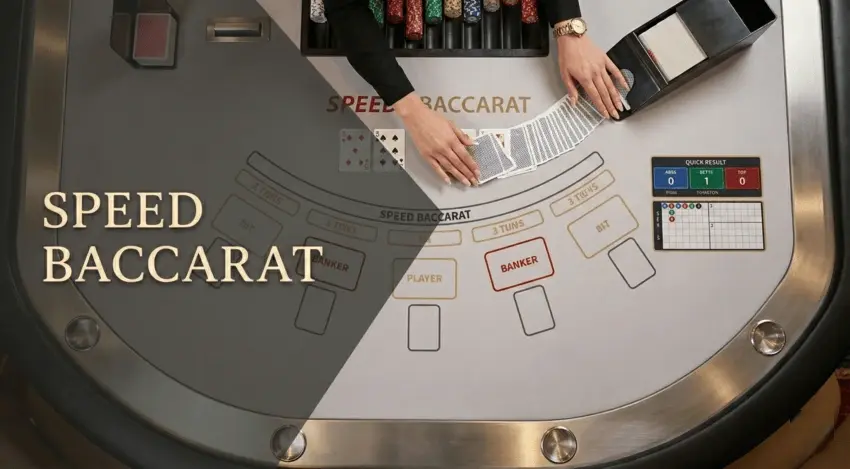
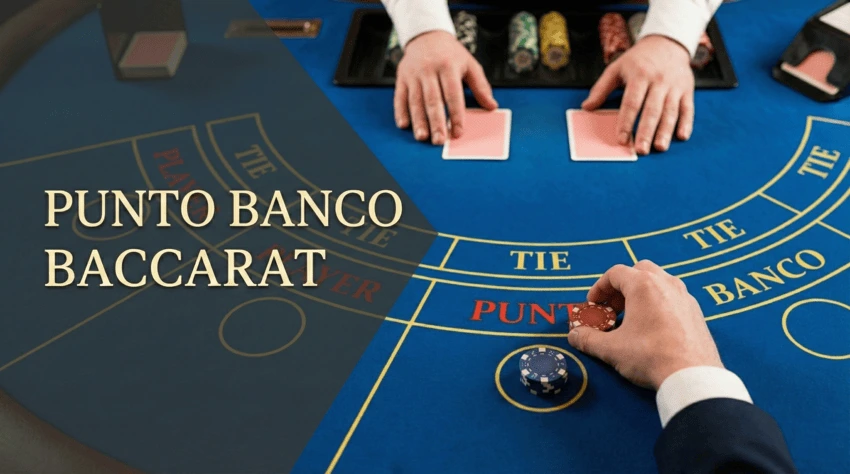
Punto Banco is the most popular version of baccarat. Two hands go head-to-head trying to get closest to 9, and here's the key part: the drawing rules are completely fixed. No choices to make. Here's what makes Punto Banco different from older baccarat variations: you don't make any decisions. Zero. That's why it's so easy to pick up, even if you've never played a table game before.
We're going to walk through how Punto Banco works, break down the payouts, explain those third card rules (don't worry, they're automatic), and share some strategy tips that'll help you bet smarter.
Walk into any casino today, and you're playing Punto Banco. The same goes for online casinos. It's basically the only version of baccarat that survived the modern era. Two hands compete. The "Punto" (that's the player) and the "Banco" (the banker). Both are racing to get as close to 9 as they can. Punto Banco's big difference? You're not making any decisions once the hand starts. That's not how older baccarat versions worked. The dealer runs the whole show. Fixed rules handle everything, so you're just betting on what happens. Can't influence it.
Punto Banco started in Europe, but the version we play today is? That came together in Latin American casinos sometime in the 1950s and 60s. Then it hit Las Vegas. And that was pretty much it. Within a few decades, Punto Banco took over everywhere. Today, when someone mentions "baccarat" at a casino, they're almost always referring to Punto Banco.
Why did it take off? Simple: anyone can play. You place a bet, watch the cards, and collect winnings if your chosen side wins. No complicated decisions interrupt the flow, and the house edge ranks among the lowest of any table game. That combination explains why Punto Banco attracts everyone from first-time players to high rollers at crypto baccarat tables.
Baccarat's been around for centuries in different forms. Punto Banco? It's the stripped-down, no-frills version. Here's the big split. Punto Banco automates everything. You can't make choices that change what happens. Older baccarat games? They actually let you decide some things.
Take Chemin de Fer. You still see it in some European casinos, and it's a totally different experience. Players swap the banker role back and forth. And both sides? They get to decide if they want that third card. So you're actually making calls during the game. Plus, you're playing against other people at the table, not just the casino.
Punto Banco? None of that happens. The casino is always the bank. And those drawing rules? They're locked in. There's a chart, and that's what the dealer follows every time. You're just betting on what'll happen. You're not actually part of the decision-making.
Then there's Baccarat Banque, which falls in the middle. One person stays as banker for a while, and you still get to make some choices about drawing cards. But it never caught on as Punto Banco did. Casinos wanted something faster and more predictable. Automated rules gave them that.
You can learn Punto Banco in about 30 seconds. Seriously. Same sequence every time. Your one job? Decide where to put your chips before the cards hit the table.
You've got three bets: Player (Punto), Banker (Banco), or Tie. Pick one. Put your chips in that spot on the table. Once betting's closed, that's it. Can't switch.
The dealer pulls two cards for each side. Both go face-up. Everyone sees both hands right away. Nothing's hidden.
Add up the card values, but here's the catch: only the last digit matters. So if you've got 15, that's actually a 5. A hand totaling 9 stays at 9. The goal's simple. Beat the other hand by getting closer to 9.
Based on those first two cards, the rules tell the dealer if anyone gets a third card. Dealer runs it all on autopilot. Don't stress about memorizing anything. Knowing the rules just makes it easier to follow what's happening. That's all.
If either side pulls an 8 or 9 right off the bat, that's a "natural." Round's over. Otherwise, they might draw third cards. Then whoever's higher wins. If it's a tie, your Player or Banker bet pushes. Unless you bet on Tie itself.
The scoring's weird compared to other card games. Throws people off at first. Here's what each card is worth:
Go over 9? Drop the first digit. 7 plus 8 is 15, so your hand's worth 5. 4 and 6 gives you 10, which means you've got 0. This system keeps every hand between 0 and 9. No exceptions.
Each bet works differently. Different risks, different payouts. Knowing what you're getting into helps you bet smarter.
Player bet pays 1:1. No commission is taken out. Super clean. Player wins, you double your money.
Yeah, there's a 5% commission when Banker wins. But it's still got the best house edge in the game. Banker wins a bit more often because of how those third-card rules work. That's why casinos take their piece. Most players who know what they're doing stick with Banker for long sessions. The math adds up better over time.
Tie pays 8:1 or 9:1, depending on where you play. Sounds great, right? Here's the problem. Ties don't show up often enough to make that payout worth it. Think of it as the wild card bet. Looks tempting, but it'll burn you if you chase it.
Third card rules run themselves. You don't decide anything. But knowing when cards get pulled? It helps you see what's coming and why hands end the way they do.
Player side's pretty straightforward:
Banker's more complicated. What they do depends on their total and which card Player pulled (if Player got one). Gets a bit messier, but the dealer handles it all:
Don't bother memorizing this. Dealer's got it covered.
Punto Banco offers some of the best odds among casino table games. Banker's got the lowest house edge. Player's right behind it. But Tie? Way higher house edge. That's why people who know the game skip it.
That gap's no joke. Play long enough, and it adds up fast. Stick with Banker or Player, and your money lasts longer. Chase that Tie payout, and you'll burn through your stack.
The odds don't change whether you're playing in person or at a crypto table online. Math's the same everywhere.
Can't control the cards, so strategy's all about picking bets and managing your bankroll. Follow a few rules, and you won't blow through your money as most people do.
Math says so. Yeah, you pay commission when you win. But you win often enough that it's still worth it. Lots of people switch between Banker and Player just to mix it up. That's fine. But if you want the absolute best edge, stick with Banker.
That 8:1 payout looks good. But the house edge means you'll lose money on it if you play enough hands. Drop a bet on it once in a while for fun if you want. Just don't make it your main play.
These rounds fly by. Under a minute per round. Your stack can jump up or crash down before you know it. Set your limit before you start. Then stick to it. Doesn't matter if you're up or down.
See those electronic boards tracking past results? They're just for show. Every hand's its own thing. What happened before doesn't change what happens next. Martingale and those other betting systems? They don't change the math. At all.
Even though Punto Banco is simple, some habits will wreck your bankroll fast:
JB's Punto Banco tables take crypto deposits and withdrawals instantly. No waiting around. They use provably fair tech. You can check the math yourself and prove nobody rigged the hand after it played out.
Whether you prefer standard tables or live dealer Punto Banco, JB keeps the experience fast and friction-free.
Legit sites use certified random number generators. They also get audited by outside companies. Provably fair crypto casinos? You can check each hand yourself using crypto verification tech.
Technically, yeah. But with multiple decks, the advantage you'd get is basically nothing. Unlike blackjack, the payoff doesn't justify the effort.
Banker wins a bit more because of how those third-card rules work. Without that commission, you'd actually have an edge on the casino.
Banker's got the best house edge, and you don't make any decisions. Perfect if you're just learning how the game flows.
Lots of tables have side bets. Player Pair, Banker Pair, Dragon Bonus. Side bets have worse house edges than the main bets. Throw one in once in a while for fun, but don't build your strategy around them.