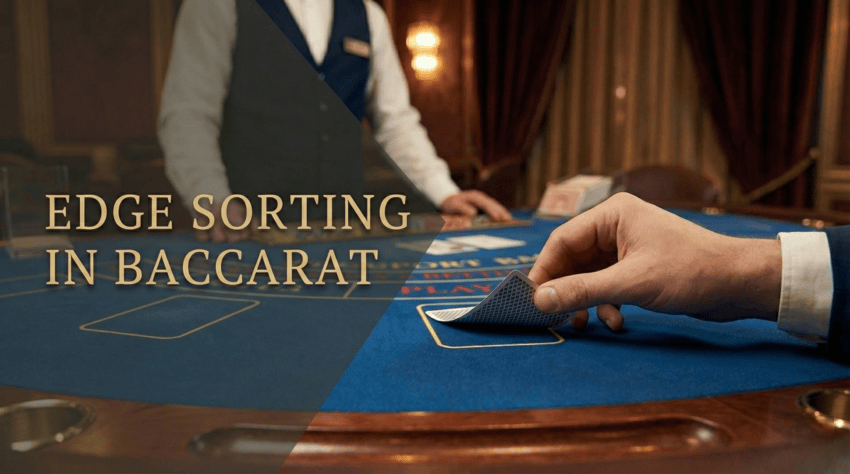
Look, edge sorting sounds complicated, but it's actually a pretty simple strategy for baccarat. You're basically using tiny printing mistakes on card backs to figure out if the next card is high or low before anyone flips it over. Phil Ivey made this technique famous. He won millions playing baccarat until the casinos figured out what he was doing and dragged him to court.
We're breaking down exactly how this works, why baccarat players loved it, and what happened when the lawyers got involved.
Cards aren't perfect. Printing machines leave tiny flaws on the backs, and if you know what to look for, you can tell whether a card is high or low without seeing its face. Here's the thing: card designs usually aren't perfectly symmetrical. The pattern on one edge looks slightly different from the opposite edge. Rotate a card 180 degrees, and the edges won't match. Once you know what to watch for, you're reading cards before they're even flipped.
The technique became famous through high-stakes baccarat, where knowing whether the next card is high or low can shift the odds dramatically in a player's favor. Unlike card counting in blackjack, edge sorting doesn't require tracking dozens of cards mentally. The real trick is getting the dealer to sort the deck for you without them realizing what's happening.
Here's how the core concept breaks down:
Why baccarat specifically? Baccarat players are notoriously superstitious. You can ask dealers to rotate cards 'for luck,' and nobody bats an eye. That superstition thing? Perfect cover for edge sorting.
Here's how players pulled this off. Three steps, and none of them are obvious. Miss one step and the whole thing collapses.
Some card companies mess up the printing. The design on one edge doesn't match the other. One edge shows a full diamond, the other shows three-quarters of one. You won't notice unless you're actively hunting for it.
Players asked for specific card brands. Gemaco's Angel cards were popular because the backs had these flaws. The cards look fine until you really study them. Then you see the mismatch. One edge might show a full diamond shape while the opposite edge shows only three-quarters of the same shape.
Here's where it gets interesting. You can't just grab cards and start flipping them around. Surveillance would catch you in about five seconds. Instead, they convince the dealer to do it for them.
So players used superstition as cover. A player might ask the dealer to rotate all "good" cards (like 7s, 8s, and 9s) one way "for luck." High-value cards end up oriented differently from low-value cards. The dealer thinks they're just humoring a superstitious player. Really, they're building a sorted deck.
Once the deck's sorted, it stays that way until someone shuffles or rotates the cards again.
Now you just watch the cards come out of the shoe. The edge tells you if it's high or low before anyone flips it.
In baccarat, that one piece of information changes everything. Knowing the first card's value helps predict whether Player or Banker will win. The house normally has a 1% edge. With edge sorting, that flips completely in your favor. You're not guessing. You know what's coming next.
The legal stuff gets messy. Courts said it's not technically cheating. You're not marking cards, using devices, or working with dealers. The flaws were already there. You're just noticing them.
But casinos don't have to pay you. When casinos refuse to pay, courts back them up. They call it breaking the unspoken rules of the game.
The distinction matters. You won't go to jail for edge sorting, but you also won't keep your winnings if the casino figures out what happened. It's legal to attempt, but the house has no obligation to pay out.
Phil Ivey made edge sorting famous by getting sued twice and losing both times. These cases basically decided how the law sees edge sorting.
In 2012, Ivey won approximately $9.6 million playing baccarat at the Borgata in Atlantic City. He had a partner who spotted the card flaws and asked dealers to rotate them.
The casino sued, and a federal court ruled against Ivey in 2016. The judge said Ivey didn't break the law, but he broke the casino's rules by changing how the game worked. He had to give back every dollar.
The same thing happened in London at Crockfords. Ivey won £7.7 million. The casino simply refused to pay, returning only his original stake.
Ivey sued to recover his winnings and lost. In 2017, the UK Supreme Court called it cheating. They said Ivey tricked the casino about what he was really doing. The decision was unanimous.
Both cases said the same thing: edge sorting won't land you in jail, but you're not keeping the money. The courts saw it as cheating through trickery, even if you didn't break any actual laws.
Everyone talks about baccarat, but technically, you could edge sort any card game with flawed backs. Poker and blackjack could work, but they're way harder to pull off.
In poker, players handle their own cards, which creates opportunities but also scrutiny from other players and dealers. In blackjack, the fast pace and frequent shuffling make maintaining a sorted deck nearly impossible. Cards get rotated constantly, and automatic shufflers randomize orientation with each shuffle.
Baccarat is stuck because the game's slow, dealers handle cards ceremonially, and superstitious requests don't raise red flags. Other games just don't line up the way baccarat does.
Short answer: no. You need actual cards with printing flaws. Online baccarat doesn't use real cards. Everything's generated by software.
Online platforms, including crypto baccarat sites, eliminate this vulnerability. Those cards you see? They're just graphics showing what the random number generator picked. There's nothing to sort because there's nothing physical to observe.
Provably fair systems go one better. You can actually verify the game didn't cheat you. Instead of hunting for flaws, you check the math after each hand to confirm everything was fair. The system uses hash functions. You can check if the outcome was locked in before you placed your bet. It's a different way of trusting the game. You're verifying fairness instead of looking for ways to cheat.
After Ivey got sued, casinos changed everything. Casinos shut down edge sorting pretty fast. It doesn't work anymore.
Once casinos figured it out, the opportunity disappeared. Try it today, and security will catch you immediately. Symmetrical cards plus automatic shufflers killed it completely.
Learning about edge sorting isn't going to help you cheat. The technique's dead in casinos, and it never worked online anyway. So why does it matter?
The story shows how advantage play works and why casinos spend so much time protecting their games. There's a difference between finding loopholes and playing games that are actually transparent. Edge sorting worked because players saw things casinos didn't think anyone would notice.
If you care about playing fair games, provably fair systems give you something edge sorting never did. You can verify everything's legit without hunting for flaws. The math's open, you can audit the results, and you're not relying on spotting printing errors. That's where gaming's going. Less about exploitation, more about transparency.
You need cards with asymmetrical backs. Certain manufacturers accidentally print them that way. The most commonly cited brand in legal cases was Gemaco's Angel brand cards. Most casinos switched to symmetrical designs just to stop edge sorting.
No. Courts in both the United States and the United Kingdom ruled against Ivey. He was required to return approximately $10 million to the Borgata and never received his £7.7 million from Crockfords.
No. Automatic shufflers randomize card orientation with each shuffle, making it impossible to maintain any sorted pattern. That one change killed edge sorting in casinos.
Baccarat players are superstitious, so asking for card rotations seemed normal. The slow pace and tolerance for weird requests gave players room to work. Faster games like blackjack don't have that.