Lucky Nines is a baccarat side bet that pays when nines show up in the first four cards dealt. You get nines in both the Player and Banker hands. More nines mean bigger payouts. Suited nines pay the most.
We'll discuss how this bet works, what you can win at different casinos, and whether card counting is worth your time here.
Look at the first four cards in any baccarat hand. If you spot at least one nine, you win. If at least one nine shows up among those initial cards, the bet wins. The payout scales up with each nine that lands. Get two nines of the same suit? That's where the real money is.
The main baccarat bet is about which hand wins. Lucky Nines? You're just counting nines. You're not betting on Player or Banker outcomes here. You're betting on whether nines will appear in the deal itself.
This bet runs separate from the main game. You can place it alongside your regular baccarat wagers or on its own. The main hand's outcome doesn't matter here. You're only watching for nines.
The mechanics are simple once you see them play out. Everything depends on those first four cards, two for Player and two for Banker, before any third-card drawing rules apply.
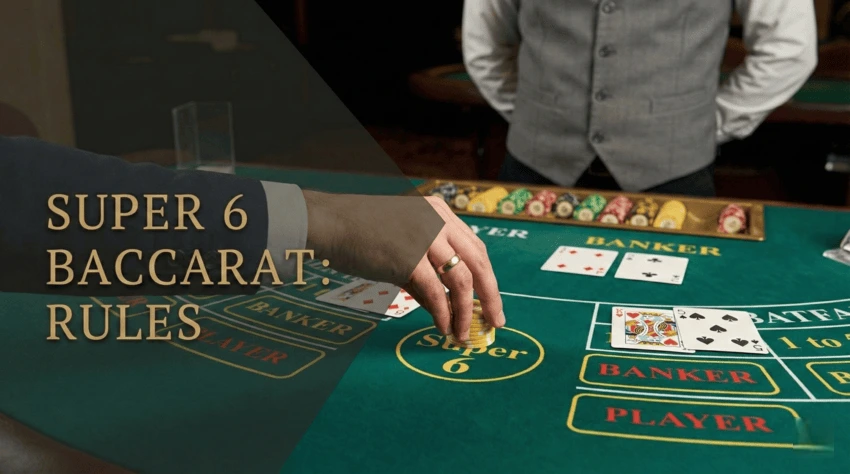
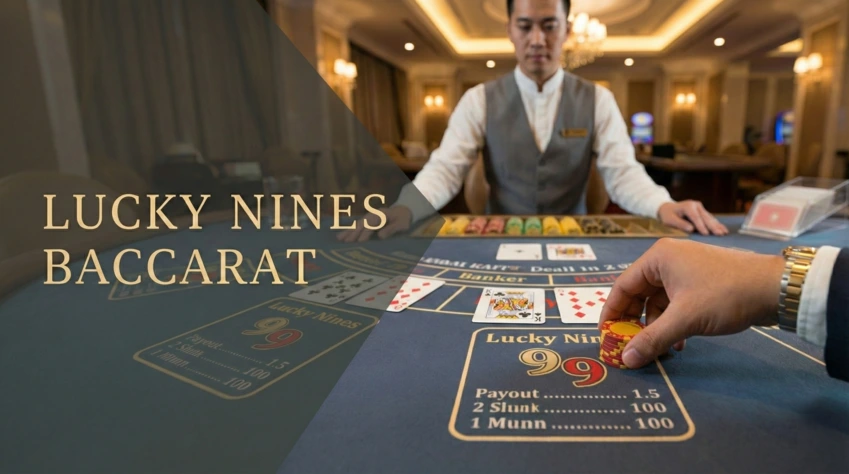
Place your Lucky Nines bet before the dealer starts dealing. Most tables mark a specific spot for this bet, usually near where you place your main bets. The timing matches your regular baccarat bets, so everything goes down at once.
Once those first four cards hit the table, you know right away if you won:
That big jump from one nine to two nines? It's all about the odds. A single nine appears fairly often. Two nines in four cards? That happens way less often, so the payout jumps.
When you hit two nines, check the suits. That's what decides how much you win. Two nines of different suits (like the nine of hearts and nine of clubs) pay well. Two nines of the same suit pay way more because the odds are much tougher.
Here's why: an eight-deck shoe has 32 nines total, scattered across 416 cards. Each suit contains only eight nines. To get two suited nines, both cards need to come from just eight nines in that suit. It doesn't happen often.
Payouts change depending on where you play. Different casinos, different providers, even different tables at the same casino. Checking the posted payouts before betting is worth the few seconds it takes. Here's what a typical structure looks like:
Most tables break payouts into levels. The single-nine payout hits often enough to keep things interesting. The suited-pair jackpot is the long-shot everyone's chasing when they play side bets.
Single-nine wins show up often enough that you'll catch some payouts during your session. Big payouts don't happen much, but when two suited nines land, you're looking at a serious win.
Land-based casinos, online platforms, and crypto baccarat tables often run different pay tables for Lucky Nines. Some offer more generous single-nine payouts but cap the suited bonus lower. Other tables flip it: smaller base payouts, bigger jackpots.
The house edge shifts depending on the full payout structure, not just the top prize. A 100:1 payout on suited nines beats 50:1, right? Not if the single-nine payout drops. Check the full table before you assume anything.
Side bets in baccarat usually have worse house edges than the main game. Lucky Nines is no different. The Banker bet runs around 1.06% house edge, while Player sits near 1.24%. Lucky Nines edges tend to land somewhere between 4% and 9%, depending on the specific pay table.
That difference adds up over time. For every dollar you bet, Lucky Nines costs you more than standard bets if you play long enough.
The trade-off is volatility. Main baccarat bets pay close to even money (minus commission on Banker wins). Lucky Nines can return 50x or more on a single hand. If you like the occasional wild swing, the trade-off might be worth it. Playing for the long haul? Skip it.
This question comes up often, especially among players familiar with blackjack advantage play. The short answer: theoretically yes, practically not really.
The logic is sound. If you track which nines have been dealt, you can predict what's left in the shoe. If most nines are already gone, your odds tank. If the shoe still has plenty of nines left, your chances improve.
Some number crunchers claim that if the shoe's loaded with nines, the edge can actually flip to your favor. On paper, the math works.
Here's where theory meets reality. Most online and crypto baccarat tables use continuous shuffle machines or cut cards that leave big chunks of the shoe undealt. Both practices destroy counting viability.
Live dealer games with shoe-dealt cards offer slightly more opportunity, but casinos know this. Penetration (how deep the dealer goes before reshuffling) stays shallow enough that you won't find many chances to exploit.
Even when the count looks good, your edge is tiny and the swings are wild. To actually use this edge, you'd need a big bankroll, tons of patience, and the ability to jump your bet size without the casino noticing.
Lucky Nines and Lucky 9 get confused constantly, but they're completely different games.
Lucky Nines is a side bet within standard baccarat. You're betting on nines in those first cards while the main game plays out around you.
Lucky 9 (sometimes written as "Lucky Nine") is a standalone card game that blends baccarat-style scoring with blackjack-style player decisions. In Lucky 9, you receive cards and can choose to hit once, trying to reach a hand total of nine. The dealer follows fixed rules, and whoever gets closer to nine wins.
If you're searching for information about the baccarat side bet, make sure you're not accidentally reading about the hybrid card game. The rules, house edges, and best strategies are completely different between these two games.
Baccarat tables often feature multiple side bet options. Knowing how Lucky Nines stacks up against other side bets helps you decide where to put your money.
Dragon Bonus pays based on the winning margin of the hand. A natural win (eight or nine on the first two cards) pays, and larger margins pay more. Unlike Lucky Nines, Dragon Bonus connects to the main game's outcome.
The house edge on Dragon Bonus usually runs close to Lucky Nines, though pay tables change that. If you want your side bet tied to the main hand, Dragon Bonus usually beats card-composition bets.
Player Pair and Banker Pair pay when either hand gets two cards of the same rank. Pair bets share Lucky Nines' focus on card composition but look at rank matching rather than specific values.
Pair bets usually run 10% to 12% house edge. That's worse than Lucky Nines at most tables.
The Tie bet pays when Player and Banker finish with equal point totals. Tie bets get prime real estate on the table, but the house edge sits around 14%. That's one of the worst bets you can make.
Lucky Nines beats Tie for expected value at pretty much every table you'll play.
Side bets exist for entertainment, not optimization. Players focused purely on minimizing house edge stick to Banker bets and skip everything else.
But that's not why most people play. A 50:1 or 100:1 payout on one hand? That changes how the whole session feels. Watching those first four cards with extra action on the line hits different than flat even-money bets.
Keep Lucky Nines to a small chunk of your total action. That's the smart play. Bet amounts you're comfortable losing at a higher rate, and enjoy the occasional windfall when suited nines appear.
On crypto baccarat tables at JB, you can explore Lucky Nines alongside provably fair main bets. Provably fair means the randomness of each deal is cryptographically verifiable, so you can confirm the outcome wasn't manipulated. That transparency matters when you're chasing long shots.
A nine equals nine points. That's the highest value any single card can have in baccarat. If your first two cards total nine (called a "natural nine"), you've got the best starting hand possible. You win right away unless the other side also has a natural.
The Banker bet has the lowest house edge at about 1.06%. That makes it the safest bet mathematically. The 5% commission on Banker wins explains this edge. Player bet runs a bit higher at 1.24%. Tie and most side bets have way worse odds.
Yes. Many crypto casino sites have Lucky Nines and other side bets, especially at live dealer tables. It depends on the provider, so check the table rules before you sit down.
No. Pay tables differ between casinos, game providers, and even individual tables within the same casino. Small pay table differences can change the house edge quite a bit. Check the posted payouts before you place side bets.