Don't Pass Line Bet in Craps

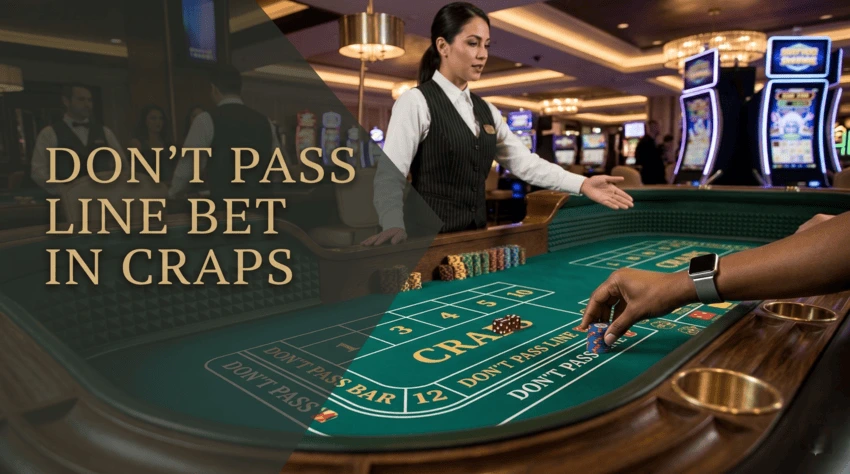
You're about to learn the bet that most craps guides bury under ten paragraphs of fluff. The don't pass line bet sits right on the felt, carries one of the lowest house edges in the entire casino, and pays even money. It's simple, it's smart, and it quietly outperforms the more popular pass line bet.
Here's everything you need to know, minus the stuff you don't.
What is the don't pass line bet?
The don't pass line bet is a wager against the shooter. You place it before the come-out roll (the first roll of a new round), and you're betting that the shooter will lose.
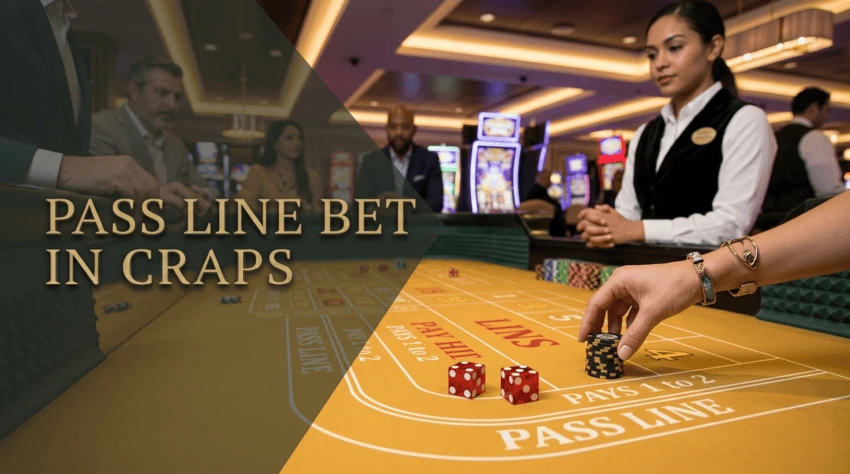
It's one of two main "line bets" in craps. The pass line backs the shooter. The don't pass line fades them. Players who bet the don't pass are sometimes called "wrong bettors."
That term sounds judgmental. It isn't. It's just old craps lingo that stuck around. Betting "wrong" doesn't mean you're doing anything wrong. You're just on the opposite side of the table's momentum.
If you play crypto craps at a site like JB, the rules work the same way. The math doesn't change because the chips are denominated in Bitcoin.
How the don't pass line bet works
This bet plays out in two stages. Both are straightforward once you see them laid out.
The come-out roll
The come-out roll is where it all starts. Here's what happens based on the number:
- Roll a 2 or 3: You win. Pays 1:1.
- Roll a 7 or 11: You lose.
- Roll a 12: Push (tie). Your bet stays, but you don't win or lose.
- Roll a 4, 5, 6, 8, 9, or 10: That number becomes the "point." The game moves to phase two.
That push on 12 is called the "bar 12" rule. You'll see it printed right on the felt. Some tables bar the 2 instead, but 12 is the standard. This one small rule is how the casino keeps its edge on what would otherwise be a dead-even bet.
After the point is established
Once a point is set, the rules flip in your favor. Now you're rooting for the 7.
- Shooter rolls a 7 before hitting the point: You win. Pays 1:1.
- Shooter hits the point before rolling a 7: You lose.
That's the entire bet. Two phases, clean logic.
Quick example: You put $10 on the don't pass line. The come-out roll is an 8. That's the point. The shooter rolls a 5, then a 9, then a 7. You win $10. If the shooter had rolled an 8 before that 7, you'd lose your $10.
Don't pass vs. pass line: what's the difference?
These two bets are near-mirror images. One backs the shooter, the other fades them. Here's the side-by-side breakdown:
The only structural difference between the two bets is that barred 12. Without it, the don't pass would be a perfectly even wager. The casino needed one small tweak to protect its margin, and the bar rule is that tweak.
The 0.05% edge difference won't change your night. But over thousands of rolls, don't pass gives back slightly more to the player. If you're choosing between the two on pure math alone, don't pass wins.
House edge and odds
Let's put numbers on it.
- Don't pass house edge: ~1.36%
- Pass line house edge: ~1.41%
Both of these sit among the best bets on the craps table. Compare them to proposition bets (house edges of 10% or more) and it's clear why experienced players stick to line bets.
The don't pass edge is lower because the bar 12 rule doesn't cost the player much. A 12 only shows up on about 2.78% of rolls, and it results in a push rather than a loss. The casino clips just enough value from that outcome to keep the game profitable.
For players at crypto craps tables, the math stays identical. The edge is baked into the game's structure, not the payment method.
Laying odds on the don't pass bet
This is where the don't pass bet gets genuinely powerful.
After the point is established, you can place an additional wager behind your don't pass bet. This is called "laying odds" (or the "don't pass odds" bet), and it carries zero house edge. None. The casino pays true odds on this bet.
Here's the catch: since the 7 is now more likely than the point, you're risking more to win less. The payouts reflect the actual probabilities.
Lay odds payouts by point number:
Those ratios might look backwards compared to the pass line odds, and that's because they are. You're on the favored side after the point is set. The 7 has more ways to appear than any single point number.
Odds multiples matter. Casinos cap how much you can lay based on a multiple of your original bet (2x, 3x, 5x, 10x, or even 100x at some tables). The higher the allowed multiple, the more you can bet at zero edge.
Combine a don't pass bet with full lay odds and the blended house edge drops below 1%. At a 10x odds table, you're looking at roughly 0.12%. That's one of the thinnest margins in any casino game, period. Online crypto casinos often list their odds multiples clearly on the table interface, so check before you sit down.
When to use the don't pass bet
Three scenarios where the don't pass line makes the most sense:
- You want the best math on a simple bet. No complicated side wagers, no memorizing payout charts. Just line bet plus odds.
- The table feels cold. Shooters are sevening out quickly, and pass line bettors are grumbling. You'll notice this pattern. Just remember: past rolls have zero effect on future ones. A "cold table" is a description of what already happened, not a prediction. That said, betting don't pass during a cold stretch feels a lot better than fighting it.
- You're playing solo or at a low-key table. Online crypto craps removes the social factor entirely. No one's watching you bet against the shooter. That makes don't pass an easy default for anyone focused on value.
Etiquette for wrong bettors
At a live table (or a live dealer crypto craps game with chat), most players bet the pass line. They want the shooter to hit the point. They cheer when it happens.
You, the don't pass bettor, win when the shooter loses. That creates a social dynamic worth respecting.
A few unwritten rules:
- Don't celebrate when the table loses. A quiet fist pump is fine. Yelling "yes!" when everyone else just got wiped is not.
- Place your chips calmly. No need to announce your strategy.
- Skip the lectures. Nobody at the table wants to hear about house edge math while they're playing.
- Relax. Most regulars don't care what you bet. The ones who do aren't worth worrying about.
Wrong betting is completely within the rules. Casinos put the don't pass line on the felt for a reason. Use it without apology, just without theatrics.
Pros and cons of the don't pass line bet
Pros:
- Lower house edge than the pass line (~1.36% vs. ~1.41%)
- Simple two-phase structure, easy to learn
- Pairs with zero-edge lay odds for one of the best combined bets in any casino
- No complex decisions after placing the bet
Cons:
- Bar 12 rule prevents a true even-money wager
- Social friction at crowded live tables
- During hot rolls, pass line bettors collect while you watch
- Lay odds require risking more to win less, which feels counterintuitive at first
The trade-off is comfort versus math. The don't pass line wins on numbers. It sometimes loses on vibe.
Common mistakes to avoid
Pulling down your bet after the point is set. You can do this. The casino will let you. But you shouldn't. Once the point is established, the math shifts in your favor. Removing your don't pass bet at that moment is the equivalent of folding a winning hand. You earned that edge. Keep it.
Skipping the lay odds. If you're betting don't pass and not laying odds, you're leaving free value on the table. The odds bet has zero house edge. Use it whenever your bankroll allows.
Confusing don't pass with don't come. They're similar, but the don't come bet is placed after the come-out roll, not before it. It then follows the same two-phase logic on subsequent rolls. Different timing, same structure.
Chasing streaks. A shooter hit three points in a row, so now you double your don't pass bet because "they're due to seven out." That's the gambler's fallacy. Every roll is independent. Dice don't have memory.
Final thoughts
The don't pass line bet is built for players who care about math over atmosphere. It carries a 1.36% house edge on its own, and when you add lay odds, that number can fall below 0.2%.
Few bets in the casino come close to that kind of value.
It won't make you popular at a packed Friday night table. It won't give you the rush of rooting alongside twenty strangers. But it will give you a better return over time than almost any other wager you can place in craps.
At crypto craps tables on JB, the social pressure disappears entirely. You bet the don't pass, lay your odds, and let the math do what it does. No dirty looks, no awkward silences.
If long-term value beats short-term hype for you, the don't pass line is your bet. Learn it, lay odds on it, and stop overthinking it.